

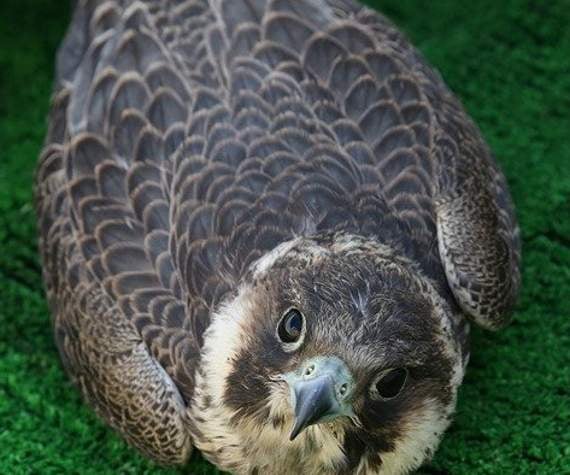
POLICE are probing the suspected poisoning of a rare peregrine falcon on the edge of Ashburton – a known hot-spot for such cruel and callous killings.
Officers fear the young bird of prey had been deliberately targeted after it was found barely alive at Glendinning’s Quarry on Tuesday.
The bird, which died the following day despite efforts to save it, will be the subject of a post-mortem examination by Natural England.
The death immediately prompted a public warning from police about the highly toxic nature of poisons used to despatch such birds.


‘They are incredibly toxic to humans and pets. Anyone finding dead or injured birds are strongly advised not to touch them or lets pets nmear them,’ warned police wildlife crime officer PC Josh Marshall.
He revealed that some poisons used to kill birds could be fatal to humans if ingested.
PC Marshall complained: ‘It is incredibly concerning that individuals are using these types of chemicals within public areas. They not only kill our wildlife but also place members of the public and their animals in harm’s way.’
He listed a string of similar attacks in the local area so far this century.
* 2011. One poisoned peregrine falcon at White Cleave Quarry in Buckfastleigh. Substance used, Aldicarb and Carbofuran.
* 2005. Poisoned bait, pigeon, used at at Glendinnings Quarry. Substance used Aldicarb.
* 2005. One poisoned peregrine and one poisoned bait pigeon. Substance used Aldicarb.
* 2003. Two men with a pigeon on a length of string appearing to try and lure peregrines from the top of Whitecleaves Quarry.
* 2000. One poisoned peregrine. Aldicarb at Glendinnings Quarry.
* 2000. One shot sparrowhawk near Buckfastleigh which survived.
In 1992 two dead peregrines were found at Whitecleaves with pigeon flesh in them.
‘Significantly, racing pigeons have been used as the bait for a number incidents both here and nationally - and the answer to solving and preventing these poisonings could lie somewhere within a rogue minority of the racing pigeon community,’ suggested PC Marshall.
He added: ‘South West Peregrines, a volunteer group who monitor these birds and others within the South West, have described the incident as abhorrent.
‘We are urging members of the local community to come forward with any information they may have that can assist in bringing these offenders to justice.’
Information is handled in the strictest of confidence and can be passed directly to PC Marshall at [email protected] or by email [email protected] or calling 101 quoting log number 0223 180817.
Information can be passed anonymously to Crimestoppers via 0800 555111 or the charity’s website at www.crimestoppers-uk.org
Tony Whitehead speaking for the RSPB in the South West said: ‘Peregrines are magnificent and much-loved birds, whose comeback over the past twenty years is a conservation success. However, once again, it appears the peregrines at this site have been deliberately targeted and, it is suspected, poisoned.
‘Should this prove to be the case, this is outrageous and the criminals must be brought to justice. We are also concerned that, should this again prove to be a poisoning, someone is wantonly placing toxic chemicals in the countryside which can be a danger to both humans and pets.
‘Someone in the local community must have information about who’s doing this and we urge people to come forward and contact the police. A £1,000 reward has been offered by the RSPB for information that directly leads to the prosecution of the offender.’