
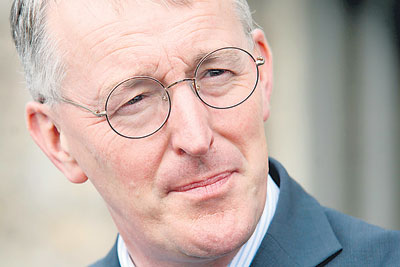
HILARY Benn renewed his message that there will be no badger cull, during a visit to the West Country this week.
But he praised the NFU's initiative in setting up a local TB Farm Advisory Service, while work continues on developing a vaccine against bovine TB.
The Secretary of State for Environment, Food and Rural Affairs had a breakfast meeting with NFU and Dartmoor National Park Authority top brass at Brimpt's Farm, Dartmeet, on Wednesday as part of a two-day visit to the region.
'I took my decision last year and I stand by it. We've got the TB Eradication Group up and running now and you will have seen some decisions taken to try and make life easier for farmers under the scourge of TB.'


Mr Benn added: 'In the end you have got to do things that are going to work. We tried culling through the Krebs trials and the work of the ISG. They found that culling badgers makes no meaningful contribution to the eradication of TB in cattle.'
He said that the amount of money going into developing a vaccine had doubled to £20m and that preparations are under way for trials.
This year 7,000 'reactor' cattle were culled in Devon alone and there are no signs that the disease is abating.
Melanie Hall, SW regional director, said: 'We are always glad of the opportunity to speak to the secretary of state. Bovine TB took up a lot of the time and the need, as we see it, for an interim solution until the vaccination evolves.'
NFU regional chairman Anthony Rew described the discussions as 'robust'.
The opportunity was taken to press the minister on other issues, such as the difficulties young farmers face as they try to enter the industry.
Mr Benn was shown a new biomass boiler installed at the farm. Fuelled by Dartmoor trees, it has cut the farm's heating costs by more than two-thirds.
He was then whisked into a second meeting about the future of upland farming, which many claim is under threat due to changes in government grants.
Kevin Bishop, chief executive of Dartmoor National Park Authority said that hill farmers delivered many public benefits in terms of access, biodiversity, high quality landscape, clean water and carbon capture and yet received very little help in return.
'We want to see if we can use Dartmoor as a test bed for seeing how we can get public payments for public benefits.'
Comments
This article has no comments yet. Be the first to leave a comment.