

TWO of Ashburton's oldest and tallest landmarks are about to disappear.
A giant redwood 33 metres tall and a western red cedar some 24 metres tall – which for more than 100 years have looked out on to West Street from the grounds of St Andrew's Parish Church – have to be felled.
Both trees have been stricken by honey fungus – a serious decaying disease which leaves infected trees liable to sudden failure. An arboricultural expert's survey revealed that the cedar had declined during the past five years and the cores taken showed the wooden surface layers are dead on parts of the tree. Much of the root system is dead and only part of the tree is alive. He found that the redwood was to all intents and purposes dead. The death of the base of the tree had disconnected the root system from the crown, depriving the tree of any nourishment.
Dartmoor National Park Authority trees and landscape officer Brian Beasley has said that the safest course of action is to fell both trees.


The vicar of Ashburton, the Rev Preb Philip Darby, said there would be a great deal of feeling in the town at losing the two trees, which had been part of the Ashburton scene for many years. He said: 'It is sad and it will be a great pity to see them go, but safety dictates that it has to be done.
'The last thing we want is for them to come crashing down on anyone, or to damage neighbouring properties or the church. 'Already some of the branches are starting to break off when there are strong winds.'
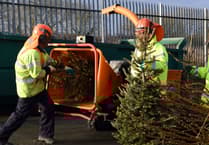
There is no grant aid for the tree felling which it is expected will cost in the region of £5,000 and will have to be borne by the church, and tenders for the work, expected to be carried out early in the New Year, are being sought. Honey fungus is always prevalent in the ground and particularly affects trees that are in a state of stress.
That can be due to old age or drought. Ironically other tall species of cedar nearby, normally the most susceptible to honey fungus, are perfectly healthy. The western red cedar and the giant redwood were introduced to this country from North America in 1853. In their native homeland they live up to 1,000 years and beyond, but in this country they do not live much longer than 100-150 years. The grassed area in front of the church is in the Ashburton Conservation Area, and both trees will be replaced.