
AS 2023 kicks off, the constant annual cycle of the Dartmoor commons kicks off once again. Here’s an update as to what the commoners, or those who graze and work on the moor, are up to, in order to work and maintain Dartmoor’s commons over the coming months.
- TB Testing
Bovine TB is a disease that affects many species from humans, cattle, birds and many other mammals. England is working to eradicate bovine TB as part of a 25-year strategy. At a practical level, most cattle on Dartmoor are tested every 6 months with a skin test to see if they may have Bovine TB.
Testing every six months can be difficult with cattle grazing well away from the home farm out on the open moor. Bringing cattle home for a TB test during the summer months disrupts their usual grazing pattern. The cattle will be brought to the home farm and retained on the home farm for the week. The cattle are injected with two different types of dead TB bacteria, one from cattle and one from birds, it is the reaction to the cattle TB compared to the bird TB that provides a positive or negative result.


A positive result will mean that animals will have to be slaughtered and the herd is put on restrictions preventing the movements of cattle for a period. The whole herd will need to test clear of TB at two whole herd TB tests that will be 60 days apart, so it takes a minimum of 4 months to check if a herd is clear of TB and enable the movement and sale of cattle.
If there is no clear test, then the herd remains on restriction, that means sales of cattle can only be to special TB market sales, or under licence to slaughter. Cattle can still graze the common as the herds are widely dispersed across the expanse of Dartmoor. No TB reactors are ever turned out on the common as TB reactors are slaughtered.
The Dartmoor Commons are unique in that they have developed a Dartmoor TB Control Plan, working with the Animal Plant Health Agency vets to create a plan that lists the cattle grazing on each common. This allows the vets to make informed decisions regarding TB control.
- Fencing against common land
There are often issues with livestock that graze on the Dartmoor commons accessing the neighbouring land. Owners of such land; farms, gardens, woodland or any land, even non-agricultural premises, must make sure the fence adjoining the common is fully stock proof. Part III, Section 9 of the Dartmoor Commons Act 1985 states that the custom on the commons is for the owner of any land not being part of the commons, to fence the land against any animals lawfully depastured on the common.
- Traditional Swailing
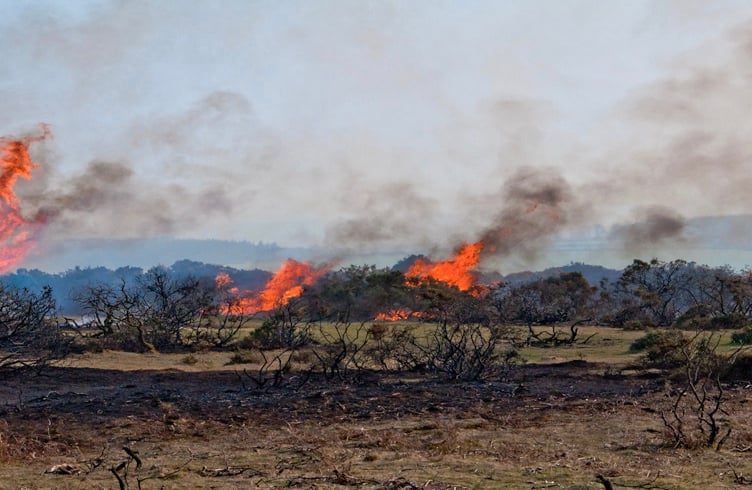
Swaling is a tradition carried out on many areas of scrub to enhance the biodiversity and condition of the commons for everyone to enjoy, the commons of Dartmoor are no exception.
The vegetation is burnt in patches, and this ensures there are different stages of the same habitat type; some old, some young and some ready to start growing again. During the 2020 and 2021 swaling was curtailed due to the COVID pandemic.
However, during 2022 and with some good weather windows a normal seasonal amount of successful swaling was undertaken. So subject to the appropriate weather and risk assessments it is hoped in 2023 that the commoners who are in agreements with Natural England, and those that are not, can work closely with the Fire Service and the National Park to undertake safe practical swales up until the end of March on Common land. In upland areas that are non-common land then swaling can extend to 15th April.
However, it is recommended that bird nesting season is considered a priority.
Comments
This article has no comments yet. Be the first to leave a comment.