

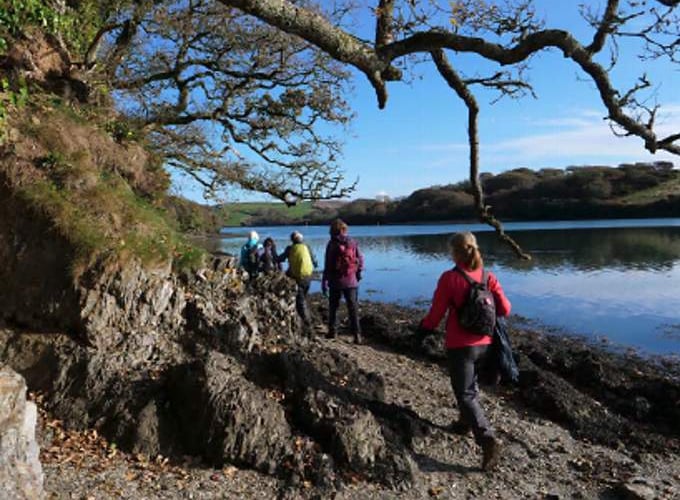
AFTER the many Newton Abbot Rambler walks that have been covered in this column, readers may be interested in the planning and preparation which precede these walks... which do run like clockwork...most times, writes Sarah Buck.
Leaders Gill Davis and Sarah Buck have put a few thoughts together to explain the process.
There is a committee of dedicated volunteers who organise the calendar of walks...up to seven walks per week throughout the year...plus arranging walking holidays, coach trips and social get togethers, such as skittles evenings and treasure hunts. All this information is put onto the club website www.newtonabbotramblers.org, which needs updating frequently by the team.
Four times a year, the walk coordinators enrol leaders to fill all the slots available with a walk of their choice to fit into the quarterly programme. Quite a task with so many dates to fill. They are available to advise prospective leaders on their proposed walks, and will even accompany the person on a ‘recce’ to check that the route is suitable and safe.
 Tens of thousands of ultra low emission vehicles registered in Devon – as campaigners group call for more equal access across UKThousands of ultra low emission vehicles registered in Teignbridge – as campaigners group call for more equal access across UK
 Kate Bush tribute to 'dear friend' lost in Devon Christmas Day swim
 Edinburgh Fringe Festival slot up for grabs to local theatre artist
Walks are planned well in advance to be included in the programme. Therefore a recce should be repeated as near as possible to the day of the walk.
The leader needs to be aware of hazards such as paths blocked, flooding, livestock in a field to be crossed, or even a missing footbridge and make last minute changes if needed.
There is much to ponder when planning to lead a walk, but it is a very satisfying and enjoyable task. Some people use local walks they know, others look to books and some use maps to plot a route.
The first consideration is whether the route fits the type of walk planned, eg. C walks are two to three miles, B walks are five to six miles and an A walk can be between seven and 12 miles. The length must be advertised in the programme - if a walker wants a ten mile strenuous moorland walk, they do not want to find the walk is only six miles or conversely if they can only cope with five miles they do not want to exhaust themselves with an eight mile hilly walk.
Walkers need to know about the terrain...are there a few very steep hills...many stiles and any hazards such as stepping stones? Consider the time of year - will the bracken be high, will the bluebells be out, have we got enough daylight – these are just some of the questions to consider. In fact, give as much useful information as possible. Contact details of the leader are needed in case of any questions prior to the day of the walk.
Due to an increase in local walking, parking space is becoming more of an issue. If the leader feels spaces are limited they might advise car share or an additional area to park. We certainly don’t want to inconvenience residents at the start points.
A place for a mid-morning coffee break (for the longer walks) and a lunch spot that is sheltered and dry must be chosen. Even better if there are some logs or banks to sit on and a view. But we can’t always have everything!
Most walks have interesting buildings, features and fables. It isn’t essential to read up on these things but it adds to the enjoyment of the day to let the walkers know something of the history of the landscape.
Some groups regularly end the walk at the local pub or cafe....giving everyone a chance to complete the day with a social chat about the walk and plans for the next one. It is useful for the leader, but not essential, to plan this ahead as due to the current restrictions, some venues are closed and an alternative may have to be found.