
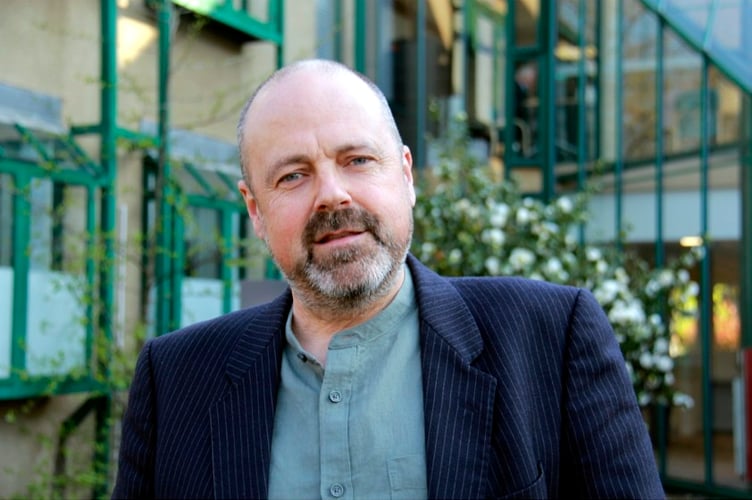
TEIGNBRIDGE Council has apologised after a councillor’s complaint was upheld by the Local Government Ombudsman.
Cllr Richard Daws, of the South Devon Alliance, has issued a personal statement.
The Ombudsman has issued a statement and the council has since apologised to Cllr Daws and said: ‘We are already in the process of reviewing our constitution and processes.’

How the Ombudsman ‘found fault with number of aspects’
Standards investigations by councils into the actions of councillors need to be conducted fairly and properly, the Local Government and Social Care Ombudsman has said.
The warning comes after the Ombudsman was asked to look at the way Teignbridge District Council investigated the actions of a councillor, Cllr Daws, after the council alleged he had acted contrary to its Code of Conduct.
The Ombudsman found fault with a number of aspects of the council’s investigation. It found the investigation was not prompted by a formal written complaint, contrary to the law. The council also did not give the councillor enough information about his alleged breaches of its Code.
The council introduced new allegations during the process, but the independent investigator appointed to look at the case did not make it clear to Cllr Daws whether these were part of the investigation.
The Ombudsman also found that the inquiry into Cllr Daws’ conduct was conflated with accusations levelled at another councillor who was also being investigated at the same time.
The council failed to reflect on the investigation and consider whether due process had been followed after Cllr Daws raised legitimate concerns about the way the investigation was being carried out. It also failed to consider Cllr Daws’ enhanced right to free speech as an elected representative, which was relevant when the council considered his justification for certain comments he acknowledged making or posted on social media.
The Ombudsman has made a number of recommendations to improve the council’s processes following the investigation, but the council has not yet agreed to accept these.
Michael King, Local Government and Social Care Ombudsman, said:
‘Local councillors have a key role in scrutinising their authorities’ actions, and have an enhanced right of free speech to ask what might at times appear to be uncomfortable questions. Councils need to bear this in mind when deciding what constitutes a breach of their Code of Conduct.
‘While both officers and members have a right to be treated with dignity and respect at work, and councils’ desire to do more to protect them from poor treatment is to be encouraged, they still need to carry out investigations into councillor standards fairly and properly.
‘I look forward to the council considering my report at a senior decision-making level and hope it accepts the recommendations I have made to improve its processes and procedures.”
‘The Local Government and Social Care Ombudsman’s role is to remedy injustice and share learning from investigations to help improve public, and adult social care, services. In this case the council should apologise to Cllr Daws and rescind its decision notice upholding the complaint the councillor breached the Code of Conduct and ensure this is no longer available on its website. It should be replaced with a statement saying the notice has been withdrawn.
‘The Ombudsman has the power to make recommendations to improve processes for the wider public. In this case the council should ensure it has a written procedure for officers and independent investigators asked to consider standards complaints.
‘The Ombudsman can investigate complaints from locally elected councillors where they allege they have suffered a personal injustice because of actions taken by a body in the Ombudsman’s jurisdiction. This is because where a councillor makes a complaint of this type, they are not doing so on behalf of the council or another public body, but in their own personal capacity. They are also not an employee, governed by a personnel relationship with a council, where there are legal limits on what the Ombudsman can investigate.’
Council says sorry to Cllr Daws
A TEIGNBRIDGEE Council spokesperson said: ‘The Council has apologised to Cllr Daws and the Ombudsman’s recommendations will be considered by the Council in the weeks ahead and to a timescale which enables us to respond in full within the three-month time frame.
‘The decision notice of 22 July 2020 has been removed and in line with our statutory requirements we shall be publishing a public notice as per the requirements of the Ombudsman.
‘We are already in the process of reviewing our constitution and processes.’
Cllr Daws says: ‘Systematic failings that have had real life impacts’
IN his Councillor’s View column, Cllr Richard Daws reacts to the Ombudsman’s report:
IN November 2019, when both Cllr Liam Mullone and I were calling out what we considered to be a ‘conspiracy to defraud’ in relation to Teignbridge Council’s dealings around the plans to build more than 1,200 houses on NA3, we were both informed by Teignbridge Council’s Monitoring Officer at the time, that we were to be put under a Standards investigation.
We asked what complaints had been made against us and who had made them. The council failed to provide that information to both myself and Cllr Mullone.
As the Ombudsman would go on to state, the wording of the law is clear. The Localism Act 2011 says to trigger any investigation of an alleged breach the Council must receive details of that allegation in writing.
The council proceeded with the investigations against us, spending tens of thousands of taxpayer funds, culminating in two shockingly executed Standards hearings in July 2020, at the height of the pandemic.
At the time we were advised TDC had acted unlawfully and breached our human rights in censuring us for breaching code of conduct.
The council offered us no route of appeal and refused to look into the legal arguments I provided them.
I then raised a complaint with the Local Government Ombudsman about the injustice TDC had caused me.
After a two-year investigation the Local Government Ombudsman found in my favour, taking the rare step of publishing the report naming both myself and the council, ‘due to the public interest’ along with ‘the injustice caused and the wider systemic problems the complaint brought by Cllr Daws had revealed’.
The Ombudsman’s report concluded: ‘The wording of the law is clear. The Localism Act 2011 says to trigger any investigation of an alleged breach the Council must receive details of that allegation in writing. There was no written complaint about Councillor Daws having breached the Code.’
Teignbridge District Council had failed to follow its own procedures and also failed to consider my enhanced right to free speech as an elected representative. The Ombudsman stating that ‘Local councillors have a key role in scrutinising their authorities’ actions’.
The report outlined a total of seven faults, also citing a concern that neither officers of councillors involved ‘paused to consider if due process had been followed. Nor what consequences a failure to follow due process might have.’
Teignbridge Council’s initial response to the Local Government Ombudsman’s stinging report into the council’s ‘flawed’ proceedings, as reported in the BBC, MDA and across other press outlets last week, was nothing short of a disgrace.
It was, however entirely predictable for a council that has failed to take responsibility for its actions for over three years.
The council statement, as published in full in the MDA included a one-line apology, but stated they were disappointed in the outcome, and was also written in a way that implied there were complaints against me. The Ombudsman had concluded there were none.
The council response also appears to suggest member (councillor) conduct is an issue and that officers needed to be ‘protected’.
In the statement outlining the council’s failings, the Ombudsman stated that both officers and members have a right to be treated with dignity and respect at work.
The council have changed tack and are now making full and proper apologies, as ordered to by the Ombudsman.
Teignbridge District Council was made aware of the full scale of injustice at every stage, but chose to ignore this.
The council has had a final report since the 21st December 2022 and its initial response, reflected their actions of the preceding three years, was totally unbefitting of an organisation that has been heavily censured for what are serious systemic failings that have had real life impacts.
Comments
This article has no comments yet. Be the first to leave a comment.