
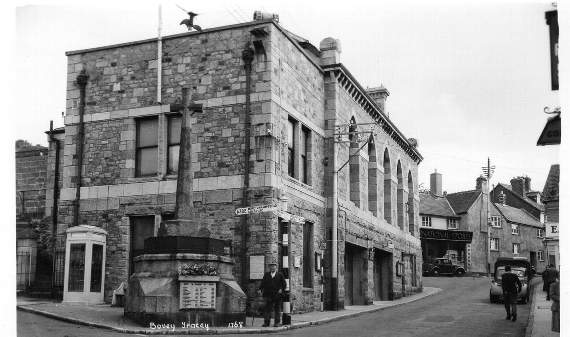
The battles of the first world war brought carnage on an unprecedented scale as the industrialised powers developed weapons capable of levels of destruction that had never been seen before.
Throughout the history of the British Army regiments had erected memorials to lost comrades; but the losses of the Great War were so far reaching that towns and villages felt the need to create memorials at which the whole community could focus its shared grief and loss.
In some communities rolls of honour had been compiled as the conflict progressed whilst in others house to house surveys were made after the war finished to obtain details of residents lost in the service of their country.
Often those collecting names were to find that the ongoing effects of injuries sustained in the war and an outbreak of Spanish Flu in the trenches in the autumn of 1918 kept adding to the list before the peace treaty was signed in June 1919.


Within weeks of the November armistice many villages set about fundraising to collect money to erect a memorial to those who had made the supreme sacrifice.
Some memorials, especially in small villages, were quite simple affairs, but in larger towns architects were employed to design ornate sculptured monuments.
The siting of memorials varied from place to place. In some parishes they were placed at roadsides near the parish boundary whilst in others they were given a more central location, but wherever they were sited they were part of a great wave of remembrance that swept across the country.
Today war memorials form an important part of the country’s heritage. The fact that they come in all shapes and sizes reflects an artistic and social history that gives another dimension to their significance.
On Sunday, communities from all over Teignbridge and the rest of the country will be gathering at war memorials to pay their respects to those that were lost.
Many of those attending such events will have no connection with anybody listed on their local memorial and it is for this reason that various organisations and societies have been researching the lives of those listed on local memorials so that people can find out about those recorded and the lives they led.
For more information on the history of Kingsteignton visit the KHS website at www.kingsteigntonhistorysociety.com.
If anybody has any pictures they would like to share, please phone me on 01626 356317 after 7pm or e-mail [email protected].
Comments
This article has no comments yet. Be the first to leave a comment.