
THE death of King George V on January 20, 1936, saw the country plunged into mourning for a popular King who was considered a man of the people.
The Mid-Devon Advertiser of that week was virtually devoted to the news of the royal death.
Featured on the front page was a photograph of the King, and the normal thin rules separating the news columns were thickened as a mark of respect.
Newton Abbot and district mourned with the rest of the Empire. The effect was seen early on Tuesday morning. The shop windows lost their bright colours, which were replaced by materials of black without relief except, for purple, the Royal mourning shade.


Black boards or black crepe paper in front of the windows gave the effect that every business establishment had lost its head. Black ties were generally worn by the men, and black hats and sombre clothing replaced gay colours for the women.
Flags were flown at half-mast everywhere. Organisers of all manner of entertainments hastened to postpone or cancel them. The doors of the cinemas remained unopened.
At the business meetings that took place and at meetings of local authorities votes of sympathy with Queen Mary, King Edward and the other members of the Royal Family were passed.
Cllr Leonard Coombe, the chairman of Newton Abbot Urban Council, at a special meeting called at a couple of hours notice on the Tuesday, said the country and the Empire had never suffered such a great loss as it had now experienced.
He did not think it was too much to say that King George had been largely responsible for building up the greatest civilisation the world had ever seen.
There were many memories of the King and Queen Mary in the area. One of them when they visited Newton Abbot during their stay at Ugbrooke House, Chudleigh, in July 1899, when the Duke and Duchess of York.
On Wednesday, January 22, 1936, the Prince was proclaimed King Edward VIII, at St James Palace.
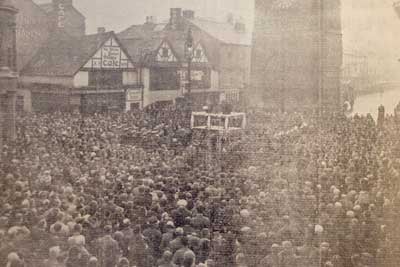
Proclamations were read at cities, towns and villages throughout the country, including thousands attending the ceremony at the St Leonard's Clock Tower, Newton Abbot.
The new King was no stranger to Newton Abbot, having visited the town as Prince of Wales in 1919 and again in 1927.
Tuesday, January 28, 1936, saw the state funeral for King George V, when hundreds of thousands crowded into London and lined the streets for the funeral procession.
In Newton Abbot a united memorial service was held in the Market Building.
It is estimated around 3,000 people attended and hundreds, unable to get in, remained in the street and were supplied with service sheets and joined in the singing.
Comments
This article has no comments yet. Be the first to leave a comment.