

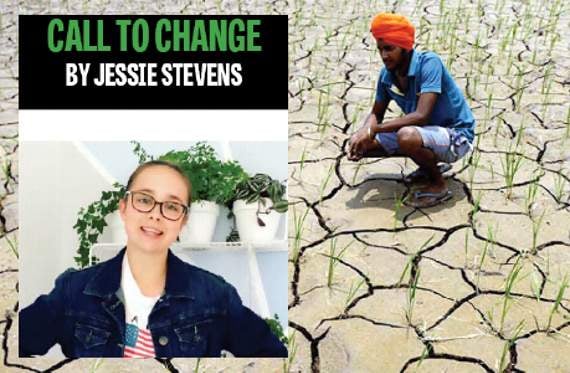
Many find comfort in the saying ‘We are all in the same boat’ however that is simply untrue when it comes to the Climate Emergency, writes Jessie Stevens
If climate change were an angry, turbulent ocean, there would be all different kinds of boats desperately trying to sail to safety through the unknown waters. Some people would be on a large super yacht happily cruising through the violent waters with its sturdy, sleek structure. The passengers onboard will only feel the gentle rock and sway of the boat. For others, they may be on a relatively sturdy, yet much smaller fishing vessel or commercial boat. In this, there is much less protection from the elements and passengers may feel sea sick, however there is no imminent threat to life. And for some, they are desperately clinging onto a dingy or piece of drift wood to keep their head above water. The waves may drag them under for a minute before pushing them up for a gasp of breath – these tiny vessels are no match for the ever-worsening storm.
I like to think in metaphors, you may not. However I am trying to illustrate how the climate crisis is solely unequal and unfair. The terrible thing about it, is that you don’t need to do anything to create it, for it to impact you. That is precisely what millions upon millions of children will find out in the coming years as climate change impacts their lives and opportunities.
This is already happening in the Global South. Those who have done very little to influence the crisis, are feeling its effects: flooding, famine, drought, and much more. Whereas in the North, whilst we are seeing increasingly hotter summers and more extreme weather, the impacts of the crisis are far smaller.




The impacts aren’t just the unequal area of the crisis; the causation is too. It takes six days for someone in the UK to create the same emissions as someone in Rwanda does in a year. Yet the inhabitants of Rwanda are feeling impacts of the climate crisis far greater than us in the UK. On a larger scale, 100 companies are responsible for 71 per cent of carbon emissions. These include BP PLC and Royal Dutch Shell.
As with most things, the crisis doesn’t stop at gender either. UN figures show that 80 per cent of those displaced by climate change are women. This is due to the fact that in many countries women have less access to education and opportunities which help them to stay out of the poverty cycle. As climate change hits those who live in poverty hardest, and women make up 70 per cent of those living in poverty globally, women are disproportionately affected by the crisis.
If climate change continues to worsen, we will all be impacted at some stage. For us in the global north, the drastic change may not be for some years. The important thing to remember is that whilst it may not be visible to us now, it is most definitely happening to someone else, somewhere else. That is why we must act now.