

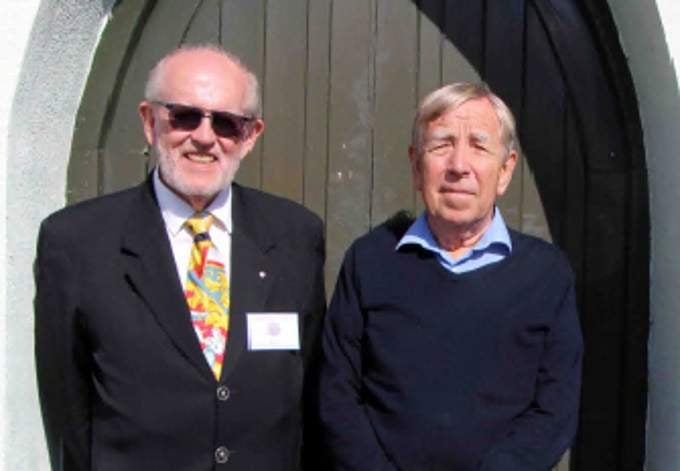
Professor Ian Barclay made an illustrated presentation to Bishopsteignton Probus Club about the Great Exhibition of 1851, an event set at approximately the same time as the Bishopsteignton Community Hall in which he was making his presentation was built.
The community hall was opened originally as the village school a year before the Great Exhibition which took place from May 1 to October 15, 1851, in Hyde Park. Called ‘The Great Exhibition of the Works of Industry of All Nations’, it was organised by a group of men, including Queen Victoria’s husband Prince Albert.
A key feature was the Crystal Palace which was designed by Sir Joseph Paxton, a gardener whose work included cast iron greenhouses with cast plate glass.
The Exhibition organisers used every opportunity to make money during construction and whilethe Exhibition was open. Examples of activities for which people paid include: tours of various exhibition halls on the site during the building work and dinner in the factory making dinosaurs for the exhibition.




It was also the first time that exhibition organisers charged people to use the toilets at one penny a time... creating the euphemism ‘spending a penny’when somebody leaves a group in order to use a toilet.
The scale of the Exhibition is difficult to comprehend, but there were 16,000 exhibits, ranging from the tiny to many gigantic exhibits, including the replica of a lead mine and ‘dinosaur land’ with its many full-size replicas (virtually the first-ever theme park).
More than six million people visited the exhibition from a population of only 30 million people in the country, yielding an enormous profit from entry prices which varied from a shilling to three guineas (£213 in today’s money).
Entry charges were pure profit because all costs had been covered before the exhibition opened by charging in advance for tours of all kinds, use of toilets, meals and many other activities.