
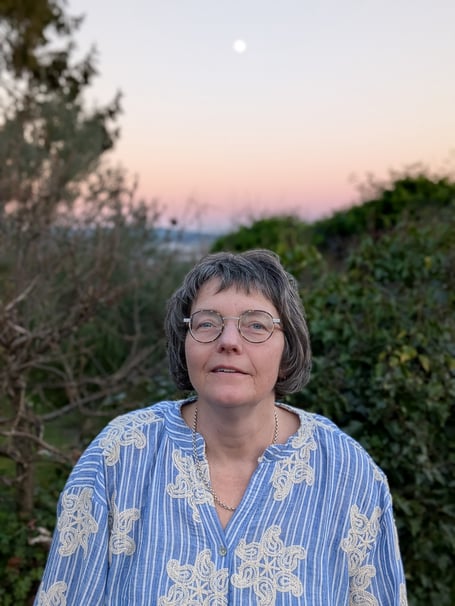
A WOMAN from Bovey Tracey with MS has described how she has been spat at for using her Blue Badge.
Retired GP Antje Ronneberger, originally from Germany, was diagnosed with relapsing MS in 2019.
Her symptoms include balance problems, fatigue and bladder issues.
As part of MS Awareness Week, Antje is speaking about living with the condition in a bid to challenge misconceptions about MS and tackle disability stigma.




Antje said: ‘I’ve felt judgement.
‘My walking distance is limited and I have trouble getting out of a car in a normal space.
‘I’ve had people come up to me and ask, ‘why are you using a Blue Badge?’ and I’ve had people saying I shouldn’t be using an accessible toilet.
‘I’ve even been spat at by a person in a wheelchair because they did not think I should be using my Blue Badge.
‘I wish people understood that MS doesn’t get better.
‘It makes me feel down when I have to repeatedly explain to people that it’s a lifelong condition and is incurable.
‘The medication just holds the progression but does not improve the symptoms.
‘And I would like people to know that everyone’s MS is different. There is no one size fits all to MS.
'Even among the same type of MS there is a high variability of symptoms and speed of progression.’
New research from eight leading MS charities has found almost half of people living with MS have been questioned or challenged using accessible facilities like Blue Badge parking space, accessible toilets and priority seats on public transport.
Nick Moberly, Chief Executive of MS Society, said: ‘Over 150,000 people live with MS in the UK, including an estimated 12,400 in the South West.
‘It affects the brain and spinal cord, impacting how you move, think and feel.
‘Right now, a lack of understanding around invisible and fluctuating conditions like MS is sadly driving hurtful behaviour, and real-life consequences - from being underestimated at work to being harassed for using an accessible parking space.
‘Living with MS is tough enough, and this MS Awareness Week we encourage everyone to take some time to listen, learn, and understand MS a little better.’
Lucy Taylor, CEO of MS Trust, added: ‘These findings are deeply troubling and reveal a wider issue: a lack of public understanding about what living with MS really means.
‘MS affects people in complex and often invisible ways, and assumptions about who ‘looks disabled’ are causing real harm.
‘As a charity dedicated to providing expert advice for every MS, we hear every day how judgement chips away at people’s confidence and independence.
‘This MS Awareness Week, we are urging the public to better understand the condition so that people with MS can access the support they need without fear of being judged.’
The survey also revealed more than half of people with MS have avoided using accessible facilities for fear of being judged or questioned.
More than one in four people with MS (28%) say that fear of judgement has stopped them from leaving the house.
The survey also reveals that 81% of people with MS have been told they ‘don’t look sick’ or received similar comments.
Comments
This article has no comments yet. Be the first to leave a comment.