
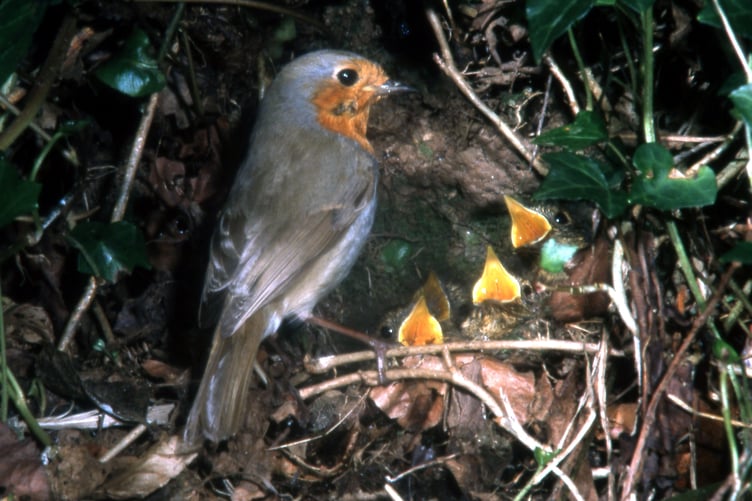
Bryan and Chris had been busy finding new nests. They put up a hide by a Robin’s nest, in the hedge-bank behind the garden shed. The white geese spent their nights in that shed. There they were safe from the hungry fox. Sometimes, Bryan and Chris asked me to protect them from the geese while they were taking turns to slip into the hide to photograph the Robins.
They had found a way of finding the male and female apart; one of them had a small black patch on its neck. They thought that this was the male and it had been fighting with a neighbouring male. As you can see the Robins posed well for their photos.
Worms were the most frequent item of prey to be brought to the four chicks, although one day, when ploughing was going on in a neighbouring field, leather-jackets were on the menu. Like the Mistle Thrushes and the Chiffchaffs, the adults removed the chicks’ droppings as they were produced, keeping the nest clean.
One day after the Robins had flown, Bryan found one of the young ones caught in the netting that was put over the red currants to stop the birds from eating them. Bryan carefully removed the little brown bird and released it to safety.



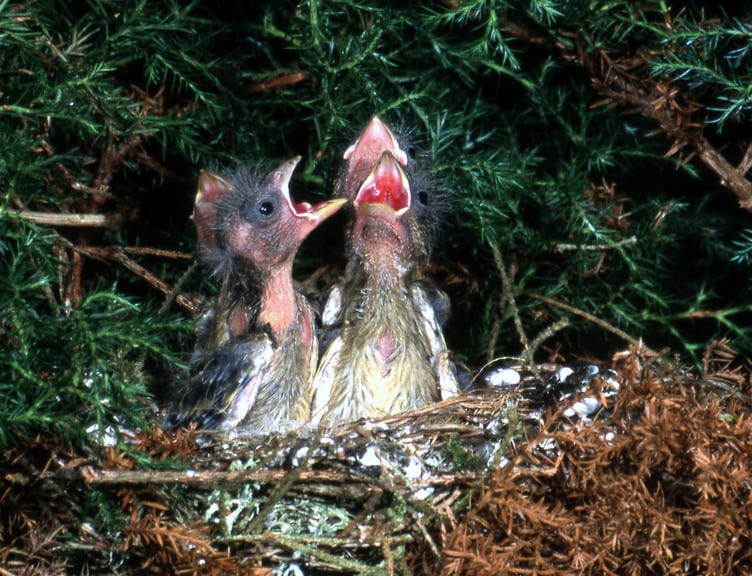
The young Robin’s brown plumage provides good camouflage during the perilous first months of its life. Not until Autumn draws near do the red breast feathers appear.
The strawberry beds were also netted to frustrate the Robins and the Blackbirds. There were many different crops growing in the garden, including potatoes, onions, runner beans and salad crops, but there were also lots of wild areas – good hunting areas for the birds.
Chris next found a Greenfinch’s nest in the bushes by the side of the grassy glade where the beehives were.
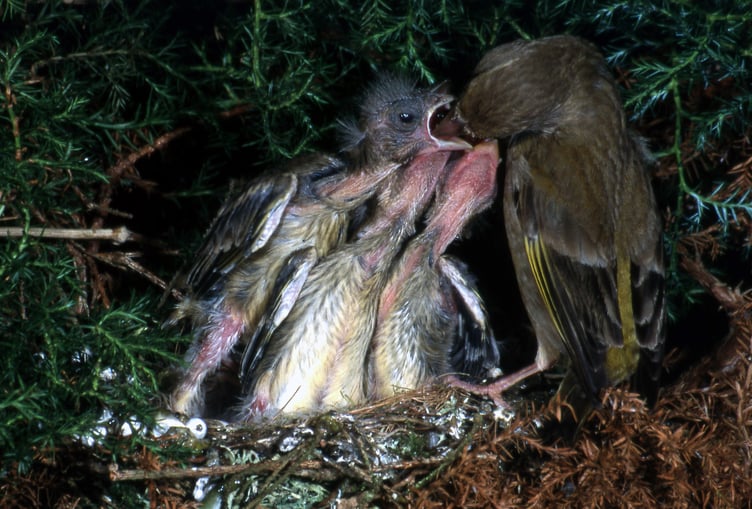
Some of the grass was kept mowed, but some was left as a wildflower meadow. We began to move a hide in towards the Greenfinch’s nest. This proved to be the most demanding family that we had watched. At first, the young were pink and feeble.
Several times, we saw the brightly coloured green-and-yellow cock bird, as well as the female coming to feed them. As they grew a few days older, the young became very unruly in their behaviour, and it seemed that ‘Dad’ couldn’t cope with the stress. The fledglings stretched up their necks and opened their red-lined mouths as if they were singing, very loudly, for their supper.
Finally, after a week or more, the five offspring reached the equivalent of their teenage years and became extremely aggressive at meal times. The mother bird had no help feeding them at this stage, and she appeared quite frightened of them, but she was determined to ensure they were properly fed.
Her efforts were rewarded, and the family successfully left the nest a fortnight after hatching.
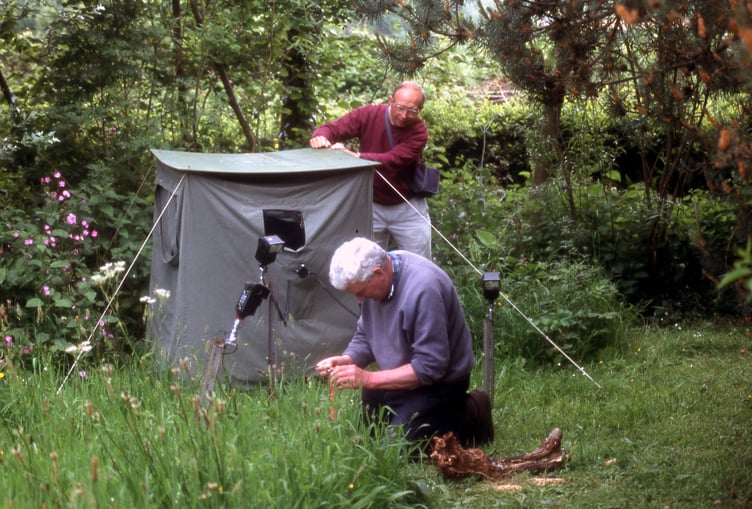
There were so many birds in the garden, some like our Greenfinches just fledged. Chris decided to start feeding them to provide more photo opportunities. He found an old tree trunk with hollows and cracks, which he filled with birdseed.
He set a hide against the hedge near the log, and he would creep into it early in the morning, before work. He was delighted when the Greenfinch family, including the male, began visiting the bird cafe.
Photos by Bryan Ashby and Chris Pierce
Comments
We've recently changed our login process. If you have an account for commenting, you will need to re-register on the login window.
This article has no comments yet. Be the first to leave a comment.