
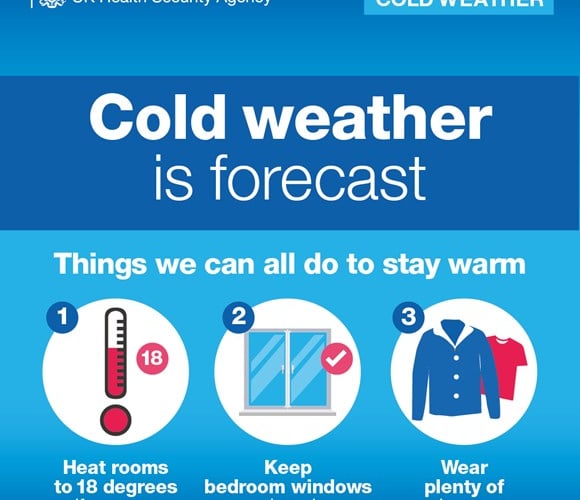
As of Tuesday, January 6, the UK Health Security Agency (UKHSA) and the Met Office have extended the current amber cold health alert for the South West.
The region will remain under an amber alert until 12pm on Sunday, 11 January. Under the Weather Health Alerting system introduced by UKHSA and the Met Office, an amber cold-health alert means that cold-weather impacts are likely to be felt across the health and social care sector, with the potential for the whole population to be at risk. Other sectors may also be affected.
The forecasted low temperatures are expected to increase the use of health care services by vulnerable people and to increase the risk to health for individuals aged 65 years and over and those with serious underlying health conditions, particularly respiratory and cardiovascular diseases. Other vulnerable groups, such as those sleeping rough, will also be at increased risk.
Dr Elizabeth Smout, lead consultant in health protection at UKHSA South West, said: “The current cold snap is now expected to last at least until this weekend, according to Met Office forecasts, and we know that prolonged exposure to low temperatures can have a severe impact on people’s health, especially if they are older or have serious health conditions.
“That is why we are urging people to check in on friends, family and neighbours who may be more vulnerable to the cold and make sure that they’re able to keep themselves warm while this period of cold lasts.
“If you have a pre-existing medical condition or are over the age of 65, it is important to try and heat the rooms where you spend most of your time, such as your living room or bedroom, in the coming days.”
Here are the ways to keep safe in cold weather:



- Check the weather forecast and the news.
- Make sure you have sufficient food and medicine.
- Take simple measures to reduce draughts at home.
- Keep bedroom windows closed.
- Wear multiple layers of thinner clothing
- If you’re eligible, get vaccinated against flu and COVID-19.
- Get help if needed – call NHS 111 or 999 in an emergency.
Comments
We've recently changed our login process. If you have an account for commenting, you will need to re-register on the login window.
This article has no comments yet. Be the first to leave a comment.