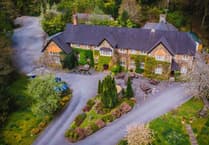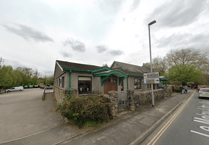
THERE was no guarantee that if permission is implemented for a mixed development on the Cardew Tea Pottery site, Newton Road, Bovey Tracey, that the Cardew factory would be relocated there, Teignbridge Council solicitor Simon Barnes told a public inquiry. He said that had been conceded and that it would be wrong to take that into account as affecting the viability of the scheme. Strategic Land Partnerships was appealing against the district authority's refusal of outline permission for mixed housing redevelopment comprising a new pottery and tearoom, altered parking, residential development and new vehicular access and a roundabout. Mr Barnes told the third and final day of the inquiry – on Thursday last week – that the scale of affordable housing in the 115 flats and houses was still in dispute. The draft Regional Spatial Strategy for the South West provided for at least 30 per cent affordable housing, with 60 per cent in some areas depending on need. Cllr Brian Berman, Teignbridge Council spokesman for planning and housing strategy, told inspector Colin Ball that if he had a mind to grant the appeal, the council considered there was a need for 50 per cent affordable. He said that in March 2004 the priority need on the housing register in Teignbridge was 1,372, in Bovey Tracey 46, Heathfield 12 and Chudleigh Knighton five. By July 2006 that had jumped to 1,983, 64, 31 and 19 respectively. 'The trend is clearly a rising one of housing need,' said Cllr Berman, who maintained that 25 per cent should be social rented, 12.5 per cent shared ownership, 12.5 per cent to be sold at 75 per cent of open market value and 50 per cent to be sold on the open market. 'Fifty per cent affordable should be considered reasonable, given the dire need,' he said, giving general assumptions of costs and repairs as showing a profit of £5 million. That assumed 58 open market homes average price of £200,000 (£11.6 million), 57 affordable homes average price £100,000 (£5.7 million), with site costs and purchase £3 million, and building costs £9.2 million. Objecting, Bovey Tracey Town Council clerk Terry Westwood said Bovey Tracey and Heathfield had provided some 750 plus new homes in the past 10 years, and this site was poorly related to the town centre services and facilities. Bovey Tracey Primary School was at near capacity and needed to expand, while St Catherine's School, Heathfield, was forecast to reach capacity within two years, when further classrooms may be needed. 'This development could provide an additional 40-60 children needing education,' he warned. Teignbridge and Bovey Tracey town councillor Anna Klinkenberg said Bovey Tracey had a natural boundary and recent developments had resulted in the Riverside Surgery being full. Residents Robin Small, Alec Coulter and Cllr David Elphick all spoke of flooding problems in the surrounding area and feared what would happen with the run-off if the development went ahead. Another resident, Bruce Meechan, was adamant that people would still drive into the town if the site got the go-ahead. A survey he conducted on Wednesday last week showed only four bicycles using the road between 7.30am and 9am and it took 17 minutes to walk into the town via Pottery and Ashburton roads, five minutes less along Newton Road. Bob Hottot, of Hottot Transport Ltd and Margaret Scott, of MJN Timber Solutions, whose businesses adjoin the site, said complaints of noise would escalate if the houses were built. For the company, town planner Jacqueline Mulliner said the most up-to-date information on affordable housing need supported a provision of 30 per cent and she considered the council's policy to seek 50 per cent was unjustified and unreasonable. Mrs Mulliner contended that in order to provide a five-years deliverable housing supply, and given delay programmed (August 2009) for making any site allocations, Teignbridge Council had to release immediately at least 1,582 dwellings through development control, increasing annually until 2009. 'Bovey Tracey, as the local service centre and in broad sustainability terms, must be considered to be a preferable location for development than the rest of the rural areas. 'The development of 115 dwellings at Bovey Tracey would be fully in accordance with the distribution strategy embodied within the emerging Regional Spatial Strategy and Core Strategy and assist in meeting the intended allocation for Bovey Tracey and the rest of the rural areas,' she said. Mrs Mulliner maintained the site was in a highly sustainable location and would contribute to the self-containment of the town. She said the application was submitted in response to the ongoing failure, over the past two years, of the Crafts@Cardew business to trade profitably. There had also been a lack of support from the planning authority to improve the financial viability of the business through the addition of more uses. Chartered environmentalist Peter Beale said: 'In terms of protected species, the creation of sensitively-planted and properly-managed buffer zones within the site will enhance dormouse habitat and provide breeding sites for birds. 'The addition of shrubs into these zones will attract butterflies and moths. These zones will provide habitats that are far better in nature conservation terms than the existing open woodland and hedge habitats which lack a thick and continuous shrub layer,' said Dr Beale. He said part of the pottery plantation immediately adjoining the site was almost certainly dormouse habitat. Householders will be encouraged to enjoy the open spaces, while respecting and looking after them, he stated. John Steel, QC, for Strategic Land Partnerships, said the council on the evidence provided had not justified the provision of 50 per cent affordable housing. He said 40 per cent affordable housing provision was entirely acceptable. Mr Steel said it was clearly not open countryside, was a sustainable location, and could mean 40 jobs. 'There is no other site in the district likely to come forward. This is an exceptional opportunity,' he said. The inspector will give his decision later.