

CAMPAIGNERS from Kingsteignton were among residents putting pressure on Devon County Council to decide who should be monitoring dust from quarries.
A series of questions to the authority has revealed no statutory body has the explicit responsibility for monitoring levels of Respirable Crystalline Silica, a fine dust generated by cutting, crushing, drilling, and moving rock.
The county council, which decides planning applications linked to quarries, can put conditions in place that require operators to monitor RCS, and residents who believe levels are causing health issues can report these to environmental health teams within district councils.
Now a motion put forward by Councillor Ed Hill to ensure Devon establishes which statutory body is responsible for protecting residents outside mineral extraction sites from long-term exposure to RCS has been passed.
It is understood monitoring of dust takes place at the Denistone and Broadway Ball Clay sites in Kingsteignton but measurement is focused on the quantum of dust rather than its composition, something Cllr Hill said was fundamental to his motion.
‘I am not claiming that residents are being exposed to dangerous levels of RCS,’ he said.
‘Nobody should make that claim without the evidence; my concern is almost the opposite – where is the evidence that allows us to confidently rule it out?’
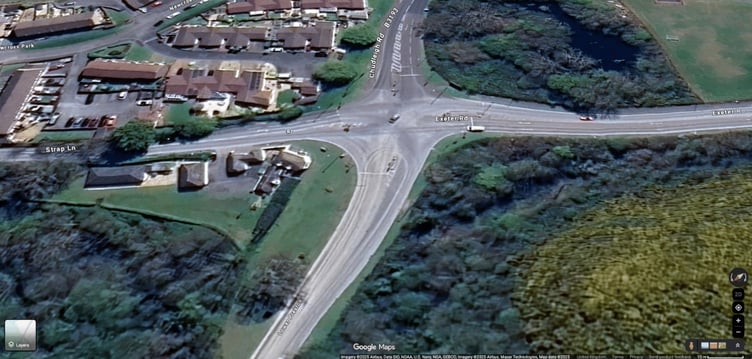
Separately, information secured by Newton Abbot MP Martin Wrigley MP showed monitoring was undertaken at the Denistone and Broadway Ball clay site at two locations; next to Preston village and Exeter Road in Kingsteignton.
Mr Wrigley said monitoring data he had seen “does not indicate dangerous levels of airborne particles and reports no risk to human health”, but acknowledged the monitoring does not specify the composition of the dust.
The MP added that Sibelco, which operates the quarries, had advised him it had strengthened dust control measures, including increased use of water bowsers to suppress dust and more intensive road sweeping.


He said the company had committed to “improving communication with local residents through the publication of regular information and fact sheets”.
At the full council meeting, Holland Risley, a member of the Save Our Trees campaign group, again raised issues residents claimed to be having as a result of their proximity to the Zitherixon quarry at Rackerhayes in Kingsteignton.
He explained: ‘My children cycle along Exeter Road to football and the swimming pool, and when the road is dry, passing lorries lift dust in a cloud, and there are other residents that live just metres away.’
Mr Risley stated that even though planning permission for the quarry requires annual reporting of dust, he claimed the council had told him none had been submitted.
He said: ‘Even the monitoring that does take place is built so it cannot see the problem.
‘The operator has proposed monitoring by visual observation, but RCS is too fine to see.’
Mr Risley added that ball clay consists of 30 per cent quartz, and that silica was a group one carcinogen, but that Devon had confirmed to him that ‘no quarry in Devon monitors it’.
Comments
We've recently changed our login process. If you have an account for commenting, you will need to re-register on the login window.
This article has no comments yet. Be the first to leave a comment.