
CAMERA-trap footage has captured a pine marten scampering through woodland in South Devon, officially confirming the return of the elusive mammal to the area after more than 100 years.
The sighting marks a significant milestone for the Two Moors Pine Marten Project, which has been working to reintroduce the once-native species to the South West.
The footage, captured this year, shows a pine marten living in South Devon after travelling at least 25 miles to establish its own territory.
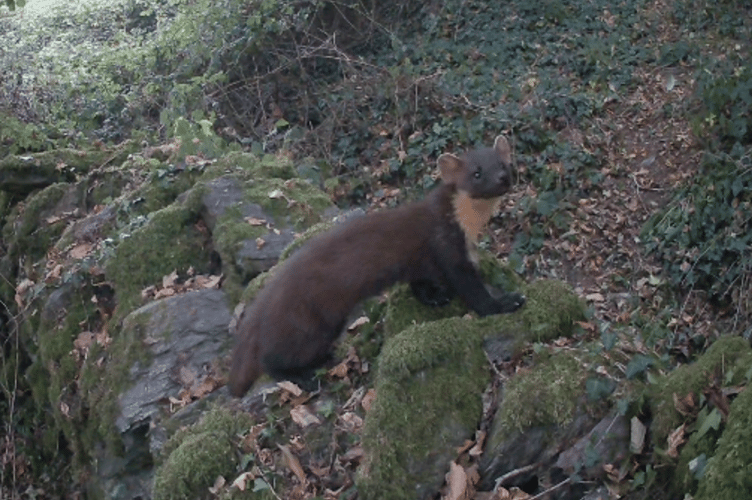
The National Trust and Devon Wildlife Trust are celebrating the discovery, which follows the release of 34 pine martens into Dartmoor and Exmoor over the past two years.
In autumn 2024, 15 pine martens were released into woodland on Dartmoor, followed by a further 19 on Exmoor in autumn 2025.
The pioneering reintroduction project is supported by The National Lottery Heritage Fund.
Daniel Brown, Devon Wildlife Trust field officer for Dartmoor, said continued monitoring using wildlife cameras had shown the animals were settling well into the South West landscape.
‘South Devon offers species such as pine martens a fantastic mosaic of scrub, grass and woodland habitats’, he said.
‘It has been fantastic working with National Trust staff in South Devon to support monitoring and habitat creation’, he added.




Pine martens were once widespread in English woodlands but were hunted and trapped to near extinction, disappearing from the region for more than a century.
Around the size of a small cat, they belong to the mustelid family, alongside species including badgers, otters, stoats, weasels and polecats.
Skilled climbers, pine martens are well suited to forested habitats and adapt their diet according to what is available throughout the year.
They eat a variety of food, including small mammals, invertebrates, birds, plants and fungi, and can prey on grey squirrels.
To help the animals establish themselves, the South Devon Ranger Team has worked with Devon Wildlife Trust to construct artificial den boxes.
Pine martens naturally make their dens in tree cavities, which can be scarce in some woodlands.
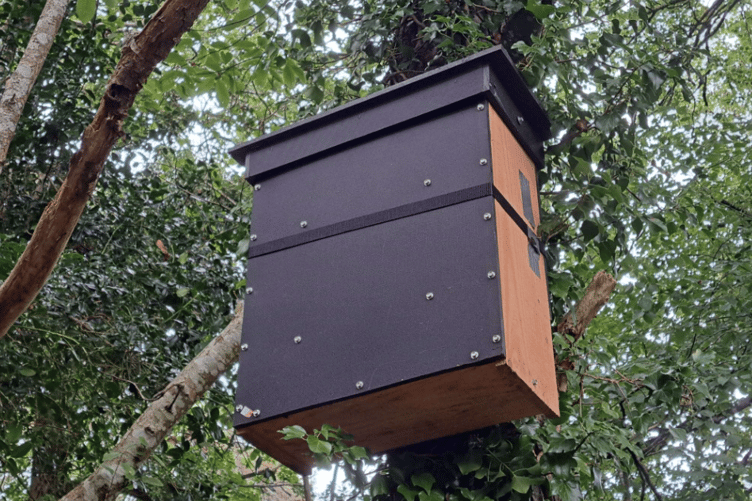
The boxes provide additional shelter and give females more opportunities to raise their young safely, away from predators and bad weather.
Each pine marten was fitted with a tracking collar before release, allowing conservationists to monitor its movements and follow its progress.
Emma Reece, National Trust lead ranger, said the team had been excited to partner with Devon Wildlife Trust on the project.
She said the pine marten's presence in South Devon was a positive indication that years of work to improve habitats were helping restore a healthy ecosystem.
National Trust rangers, conservation partners and private landowners have been working to connect green corridors and restore native woodlands, helping wildlife move between habitats and giving species more opportunities to thrive.
The Two Moors Pine Marten Project is led by Devon Wildlife Trust in partnership with Dartmoor National Park Authority, Exmoor National Park Authority, Forestry England, the National Trust, Somerset Wildlife Trust and the Woodland Trust.
People interested in helping monitor woodland wildlife can take part in Devon Wildlife Trust's Citizen Science Woodland Wildlife Survey, contributing to wider efforts to understand and support nature recovery across the region.
Comments
We've recently changed our login process. If you have an account for commenting, you will need to re-register on the login window.
This article has no comments yet. Be the first to leave a comment.