
DOUBLE white lines should be reinstated at Holcombe Dip, on the Teignmouth-Dawlish road, as soon as possible, Teignbridge Highways and Traffic Orders Committee decided on Friday.
Officers who recommended that the current road markings should remain, were accused by Cllr John Clatworthy of having a flawed argument. The lines were removed by county highway engineers, but Cllr Clatworthy said he supported the Holcombe Residents Association in its bid to get them back.
'I am not known to disregard officers advice but on this occasion, being pragmatic, I know the road is less safer to road users without double white lines. 'It was following the concerns of the residents that Devon County Council installed the double white lines. 'We talk about guidance is guidance.
It does not have to be slavishly applied. There are exceptions to policy. The Holcombe Dip without question is very dangerous. There are three junctions, a bus stop, coastal path and serious accidents in the past,' said Cllr Clatworthy, who suggested that without the double white lines overtaking was now anticipated.'


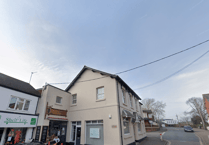

Cllr Stuart Barker said he was amazed and staggered that the lines were taken away without any consultation. 'What is the point of having a local member if he is not consulted. Where is the common sense in driving issues. Double white lines make you stay on your side of the road.
'That is a common sense argument, not government guidelines which I think are just plain daft at times. Not to take any notice of residents is even dafter,' said Cllr Barker. Fully supporting those views Cllr Brian Berman said there was a bit of history on the Hatoc committee of officers coming back again after members had made a decision. 'I hope in two or three weeks time we will see those double white lines on the road,' he stated.
The secretary of the 320 member Holcombe Residents Association, John Watson, said this section of road contained multiple hazards. 'We call for a proper integrated plan for road safety on this road and we believe the absolute priority is the re-application of double white lines,' said Mr Watson. Association member Hilary Hamson said a petition backing this view had been signed by 142 residents.
'There are five major hazards in a length of road 40 paces long,' she said adding that she was seriously concerned for the safety of her neighbours accessing the road. David Partridge, of Teignmouth Road, said he was disappointed by the report of Area South manager Brian George.
'It focuses on motorists passing through Holcombe and not residents driving out. There are poor sight lines when pulling out at Holcombe Drive and Windward Lane. 'We have to come out blindly on to the A379. We have put up a road safety mirror which has been struck three times by passing traffic. Our mirror is no longer there. It was struck down seven days ago. Now we have to rely on neighbours to let us use their driveways,' he stated. Mr George, attending his first Teignbridge Hatoc meeting, said one of the difficulties was for drivers coming out of Windward Lane onto the main road.
'Visibility from the driver's viewpoint to the left is poor. 'Having said that, my own personal conclusion is that double white lines through the whole of the road will not improve road safety,' said Mr George, who pointed out that three officers had independently shared that view. Mr George said the Department of Transport was consulted and had specifically said they were strongly in favour of it being left as it is.
'The national criteria spells it out and we have to follow DoT guidelines. 'Putting double white lines here would not help people coming out of Windward Lane. It might make it more dangerous,' he warned. Road casualty reduction officer, PC Martin Hartnell, said the DoT laid down heavy guidelines on double white lines. When there were double white lines at Holcombe Dip it had carried a national speed limit of 60mph. Now a 40mph limit had been introduced. 'The Devon and Cornwall Constabulary does not support a double white line system here,' said PC Hartnell. Then Mr George warned members they should be mindful that from the autumn the police had to look at the 3,500 road deaths in the UK.
Every death would be looked at as a homicide and investigated thoroughly. Where the highway was alleged to be at fault the investigation would look at whether the highway authority acted reasonably. 'I am not going to say we will not get a fatality, but this road is assessed as safer than the national average,' he said. Members heard that in the road death investigation manual, should the local authority be found at fault there was a question of corporate manslaughter.