
DARTMOUTH is putting up a fight to prove that the almost 300-year-old Newcomen Engine should stay in the town.
At a meeting held last Thursday in the Guildhall, the various stakeholders met to discuss future plans for 'one of the few examples of the first engine in the world'.
The meeting was well attended and the decision was to keep the engine in Dartmouth as is has an important significance in the town's history.
The plan is to move the tourist information centre out of its shared location with the engine and dedicate the whole space to industrial heritage.
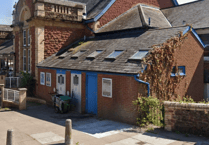



Dave Cawley, chairman of the TIC, said: 'Its been underused and now we've had a wake-up call. If this was in America it would be signposted from the M5. We want to make the whole building a heritage centre by knocking the middle wall down. It will most likely be placed under the care of the Market and Coastal Towns initiative. There is an old fire engine pump in St Saviour's Church which no body knows about that could go into the engine house as well.
'We want to improve the signage to make it attractive to today's play-station generation. We also want to get a website up and running.'
The owner of Newcomen Cottage, Ridge Hill, who has been restoring the property for the last year, is collecting Newcomen memorabilia for the house which contains items from the original cottage. He will open the room dedicated to Thomas Newcomen once or twice a year.
Mr Cawley is hoping that the improvement to the engine house and the open day will be enough to show the London-based Newcomen Society that there is just cause for keeping the engine in the town.
A working committee has been formed to approach the brokering table with the MCTi for funding.
The recently produced English heritage Pamphlet for South Devon sites the engine house as one of Dartmouth's main attractions along with the naval college and museum.
The 279-year-old Newcomen Engine, housed
From page one
habitat due to intensive farming.
'We will be planting Yarrow, Common Knapweed, Ladies Bedstraw and Meadow Cranesbill which are traditional wild flowers that would have been found in a meadow in this area.
'The flowers will attract bees, butterflies and crickets which will in turn attract bird life.
'We will be linking it in with the school creating nature trails, ideal as an educational resource.'
The trees for the orchard have been ordered and will be planted next year bearing fruit in the following year.
Traditional varieties of apples as well as cherries, pears and Dittisham plums will be grown. It is hoped a village cider pressing day will be organised in the future.