

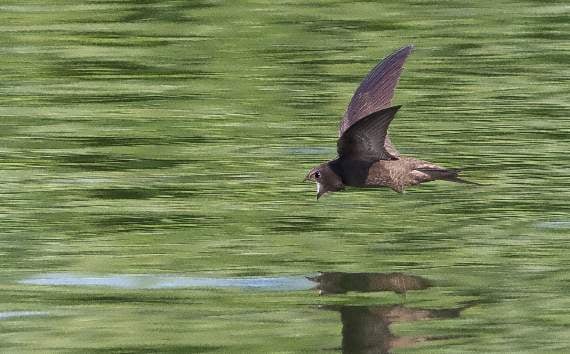
Swift enthusiast Alistair Whybrow will have information and nest boxes on display in Kingsteignton Library tomorrow, June 23, during the first ever World Swift Awareness Week.
Enthusiasts from across the UK this week, from June 16 to 23, have been raising awareness of the swifts’ plight and providing information about how people can help them
Alistair will be at the library from 10am to 1pm.
He said: ‘Many people see swifts as an icon of a British summer, as much as a cricket match on a village green, tennis or a cream tea, but sadly their numbers have declined dramatically in recent years.’




The Breeding Bird Survey found that between 1995 and 2015 swift numbers have fallen across the UK by 51 per cent, putting them on the amber list for bird species in the UK.
Swifts spend almost their entire life in the air where they feed, sleep, mate and migrate between Europe and Africa. They only land on return to the UK, when they are about two to three years old, from the beginning of May to early August, to nest and raise young.
They nest high up in buildings, such as under roof tiles or in small wall cavities. If their established nest sites are inadvertently destroyed during building renovations or reroofing and no new provision or other suitable sites are nearby, they cannot breed and the colonies die out.
The RSPB is carrying out surveys to find out where swifts are flying and nesting within the UK. This information will be useful to local authority planners, architects, ecologists and developers to identify where swift hotspots are located around the country and enable necessary planning to protect breeding swift colonies during building development.
People are being encouraged to make or buy nest boxes to help the swifts. Full instructions are available on the swift survey website, as well as ideas to help the swift populations, including writing to local councillors and MPs.
A spokesman for the swift survey added: ‘If all local planning authorities made it a condition of planning consent that swift nest boxes must be incorporated into suitable structures when they are built or renovated, which is very easy to do, the long term future of swifts will be safeguarded. This will allow future generations of people to enjoy them.’
Sightings of low flying swifts or known nesting sites can be reported to the RSPB at