

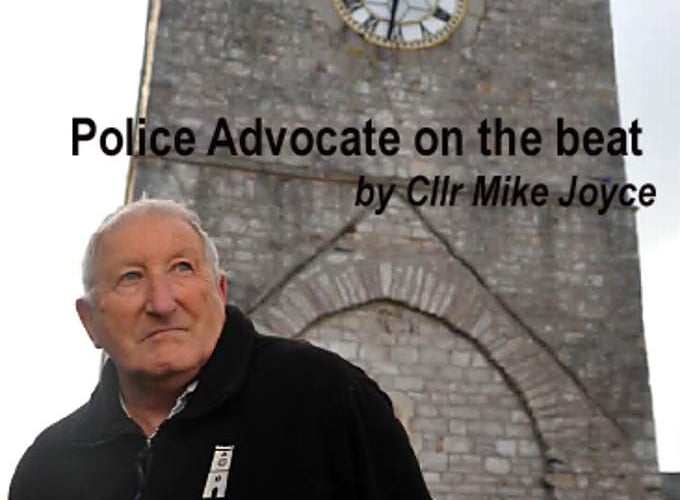
South Devon has a new head of police, Chief Superintendent Neil Ralph.
I was grateful to be given the opportunity to meet and ask some questions.
Q. Who is Ch Supt Ralph?
A. He is the Policing Commander for South Devon covering Torbay, Teignbridge and South Hams.


Neil is returning to South Devon after covering the force’s Public Protection Units, working in the Covert Operations Management Unit and, most recently, in a partnership role with agencies across Devon.
He took a leading multi-agency role helping to co-ordinate Devon’s Covid response.
Neil has spent a large part of his career in South Devon, working as a Patrol and Detective Constable in Torbay, working in the Proactive Unit before completing Patrol and Detective Sgt roles in Torbay and Newton Abbot.
He later became the Sector Inspector for Ivybridge and Kingsbridge, before taking on a uniformed Chief Inspector role in South Devon.
Neil has been with Devon and Cornwall Police for almost 21 years, after graduating with a first-class degree with honours in psychology.
He has a keen interest in promoting evidence-based policing and is the south west regional lead for the Society of Evidence Based Policing. He has completed a masters in Police Leadership and Management.
Ch Supt Ralph’s South Devon BCU (Basic Command Unit) covers the South Hams, Torbay and Teignbridge. It has approximately 450 personnel including officers, staff, Police Community Support Officers (PCSOs) and volunteers. Local teams are supported by additional officers from the wider Devon and Cornwall force and cover all aspects of policing. They work closely with local authorities, organisations, partners and communities.
He told me: ‘I am a South Devon boy, moving away to go to university and choosing to return home and join the police. I have worked across South Devon and know the local communities well.
I am keen to support all the officers, staff and volunteers in the complex work they are doing on a daily basis, to achieve the best results for our local communities. I am looking forward to working with colleagues and partner agencies to continue to make South Devon a great place to live, work and visit and maintain Devon and Cornwall as one of the safest areas in the country.’
Q. What does Ch Supt Ralph believe are the current and emerging challenges his officers are facing?
A. ‘We are clearly still seeing the global impact of the pandemic as people adjust to what might be perceived as a ‘new normal.’ This continues to impact on policing, whether it be via increased absence in our workplace, working with health colleagues to deliver multi-agency vaccination solutions or adjusting to a range of protests in relation to Covid. As we adjust to the pandemic, we have seen increases in incidents of poor mental health, which are a system-wide challenge for health colleagues.
We also know that Covid has, in some areas, widened inequalities meaning some of our most deprived communities are struggling even more now.
It is also important to continue to address violence and intimidation against women and girls, recognising we must all work together to improve our culture and service delivery in this area.
No single agency can deal alone with these problems, and we are working hard across a multitude of partnerships to deliver safe and well communities. I have been beyond impressed with the professionalism, skill and expertise I have witnessed firsthand from policing teams across a multitude of workstreams in my first few weeks in the role, and this gives me great confidence.
‘It is important the public are aware of the challenges facing policing. As technology has evolved so, in many respects, has the criminal threat and we have evolved ourselves to deal with different elements of threat, risk and harm.
We will work hard to build on traditional neighbourhood policing, ensuring we stay closely connected to our local communities.’
Q. How does Ch Supt Ralph envisage working with councils, volunteers, the varied local health and pressure groups?
A. ‘Throughout South Devon, a range of staff and officers, including myself, are in regular consultation with a huge range of partners.
We actively participate in Community Safety Partnerships, town council meetings, councillor advocate meetings, safeguarding children and safeguarding adult partnerships to name but a few.’
Q. How does Ch Supt Ralph see the role of Police Advocate assisting his task?
A. ‘A key role for police advocates is to facilitate communication between the public and the police. A great example of this is the Councillor Advocate Scheme linking the Office of the Police and Crime Commissioner, local councillors and the police.
Councillors may often have increased insight into policing matters, by virtue of their role, and information they may be aware of as a result.
Consequently, they may be able to help inform the public and local communities about local policing, as well as bringing information from local communities to the attention of the police.
Through their networks, they can also help us push out public safety information, as and when required. In this way, councillors can add great value to community safety.’