
The Royal Society for the Protection of Birds' newest reserve is at Labrador Bay, near Shaldon.
The wildlife charity bought a 123-acre site there for £375,000 in November from Teignbridge Council to help secure the future of what is at present one of Britain's rarest birds, the cirl bunting.
The money came from a successful public appeal and help from Devon County Council – and a five-year plan to improve the site is in progress.
Now, after months of work, the charity is inviting the public to an open day tomorrow (10am to noon) at the reserve.
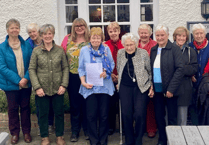


Staff and volunteers will be on hand to show people around and talk about the way the charity is looking after the site.
And on Monday, the RSPB will be hosting an informal evening at the Thatched Tavern, Maidencombe, (6pm to 8pm) where you can meet RSPB representatives and learn more about plans for the site.
Giles Beauchamp, Devon and Cornwall area manager for the RSPB, said: 'Everyone is excited about Labrador Bay and its potential for cirl buntings.
'Since taking over management of the site, we have cleared scrub, introduced animal grazing and sown crops that will provide food for the birds in winter.
'All of this will directly benefit the cirl bunting, five breeding pairs of which are already resident.'
Residents and tourists visit Labrador Bay – also a haven for bats, butterflies grasshoppers and wild flowers – in their thousands but the RSPB hopes they will look further than just the views of Lyme Bay and its coastline.
Cirl bunting project manager Cath Jeffs said: 'Being so good for wildlife, we'd like to get people on site to see the work we are doing and, of course, enjoy the wildlife including the cirl buntings.
'Labrador Bay was purchased with the generosity of a lot of people, many of whom personally know and love the area.'
It was a way of thanking supporters in person, she said.
There is an ambitious programme ahead to manage the site. It includes restoring hedges and grassland, making large areas stockproof – giving cirl buntings more protection and to protect cows from the cliffside – and other management practices.
For visitors, new signs will be installed and gateways and trails will be improved, enabling better access.
The cirl bunting was once widespread in southern England but by the late l980s there were fewer than 130 pairs surviving in England. Most were largely confined to Devon.
Investigation by the RSPB found that the species was being harmed by changes in farming practice, which was causing a reduction in breeding and feeding habitat.
So far, the success of the conservation project means that there are now more than 800 pairs of cirl bunting in Devon.
The project is also part of Action for Birds in England, a conservation partnership between English Nature and the RSPB.
Comments
This article has no comments yet. Be the first to leave a comment.