
A £1,000 reward has been offered by the RSPB after it was confirmed that a young peregrine falcon found dead at a Buckfastleigh quarry had been poisoned with banned pesticides.
Fears have been expressed that people and pets may also be at risk.
The bird was killed in July and its body found at Whitecleave Quarry. Traces of carbofuran and aldicarb were detected during toxicology tests, esults of which were confirmed this week.
The latest bird of prey killing brings the total number in the West Country this year to eight birds.
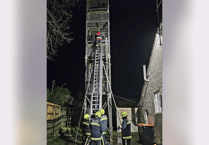


Peregrines at the Whitecleave site have been targeted previously in 1992, 2004 and 2005, all were poisoned. Conservationists have mounting concerns and the police are keen to trace the culprits.
Wildlife crime officer for Devon and Cornwall Constabulary. PC Josh Marshall, said: 'Nationally bird of prey persecution is continuing to be a major problem, particularly this year in the south west and in Devon.
'In terms of wildlife crime we welcome the fact that bird of prey persecution has been identified as a key priority for wildlife crime enforcement. Investigations can be complex and are often initially out of the public eye until analysis results are obtained.'
Ivan Lakin, Natural England's wildlife adviser in Devon said: 'Peregrine falcons have suffered from illegal poisoning in Devon for 20 years, often tricked into consuming poisoned live bait. The poison which we have seen used in many of these cases was banned more than a decade ago and it can be potentially as dangerous to the public, children and pets as it is to birds of prey.
'We treat such incidents seriously and will continue our work with other agencies under the Wildlife Incident Investigation Scheme, with the main objective of stopping illegal persecution and prosecuting people responsible for these senseless crimes.'
Tony Whitehead, for the RSPB said: 'I was truly shocked to see the images of the dead bird. Peregrines at this site have a long history of persecution. In 2005 a bird was found dead on the body of a pigeon.
'The pigeon had its wings purposely clipped and it had been doused with poison. In 2004 a peregrine was found dead near to a pigeon spiked with the poison malathion.
'And in July 1992 a peregrine was found dead alongside another pigeon similarly treated with malathion.
'This has been a truly awful year for birds of prey in the West Country. Whatever the motives of the people that carry out these deliberate acts, we must not forget that they are nothing more than common criminals.
'They show no regard for these magnificent and much loved birds of prey and also show little regard for the safety of people and their pets walking in the countryside. This needs to be stopped.'
Those found guilty of an offence against birds of prey can be liable to a fine of up to £5,000 per offence and face six months in jail.
Anyone with information can call the police on the new non-emergency number 101 quoting crime number JA/11/423. Alternatively call Crimestoppers anonymously on 0800 555 111. The RSPB is offering the reward for information that leads to a conviction.
Comments
This article has no comments yet. Be the first to leave a comment.