

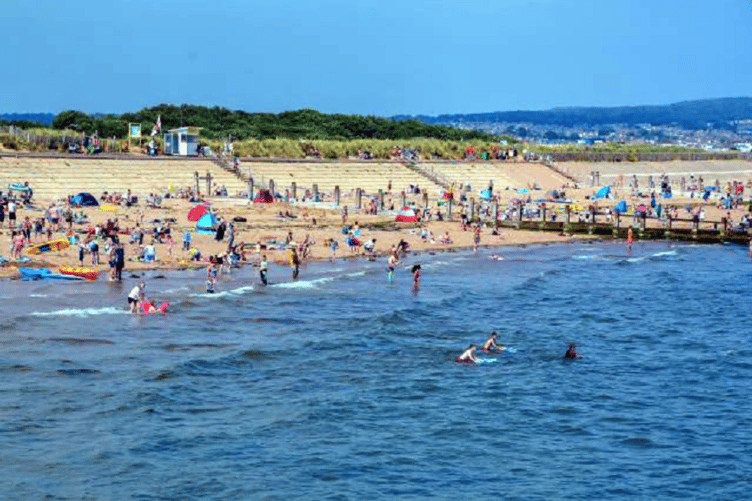
SOUTH West Water bosses have responded to tonight’s Channel 4 docudrama which features the death of a child after contracting E-coli following a holiday in Dawlish Warren.
Eight-year-old Heather Preen died in 1999 following the family’s visit to the Warren where days earlier a nearby storm pipe had discharged sewage into the sea.
The youngster had played on the Blue Flag beach but became ill a week later.
Heather was one of four primary cases of E coli 0157 contracted at the resort in 1999, linked by the fact that all four people visited the same beach on the same day, an inquest at Teignmouth was told at the time.

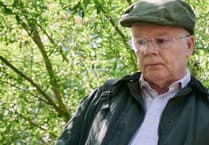

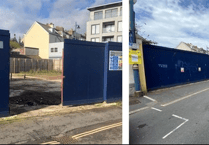
The Preen family’s story features in the new Channel 4 docudrama Dirty Business which is being broadcast as SWW is working on a multi-million pound scheme to improve water quality in Dawlish.
A spokesman for SWW said: ‘The loss of a child is devastating and we recognise the lasting impact this has had on those closest to her.
‘At the time, there was an extensive and multi-agency investigation involving public health authorities, the Environment Agency and other relevant bodies.
'The Outbreak Control Team (OCT) report concluded that, despite intensive investigations, no cause for the outbreak was identified.’
SWW says the inquest documentation confirmed that no definitive source of infection was established.
It also pointed out that the inquest report also noted that E.coli O157 is a bacteria commonly carried by animals, particularly cattle and dogs.
More than 100 environmental and sewer samples were taken as part of the investigation.
The spokesman continued: ‘The specific strain of E. coli involved in the case was not identified in samples taken from the sewer network.
‘Despite the thorough and intensive nature of the investigation, no sufficient evidence was found linking the illness to storm overflow activity or bathing water quality.
‘The circumstances of wastewater infrastructure and regulation in the late 1990s were very different from today.
‘Since then, significant investment, including through the Clean Sweep programme - which put waste treatment in fort the first time in Dawlish after decades without it.
'We understand that the revisiting of historic events through dramatisation can raise difficult questions.
‘It is important that any discussion reflects the findings of the formal investigations carried out at the time.’
Comments
We've recently changed our login process. If you have an account for commenting, you will need to re-register on the login window.
This article has no comments yet. Be the first to leave a comment.