

AN UPDATE on a controversial proposal to change a scheme that ensures rapid responses to the most serious medical emergencies is expected later this month.
The South Western Ambulance Service Trust (SWAST) is aiming to phase out fire co-responders in favour of volunteer community equivalents.
Fire co-responders at 15 of Devon’s on-call fire stations involves firefighters who are part of the scheme being dispatched to the most serious medical incidents to ensure the fastest response times.
However, the ambulance trust has been trying to amplify an existing equivalent service that sees residents trained to become community first responders.


They deal with all categories of incident, and while they don’t have blue lights, they can be sent directly from their homes.
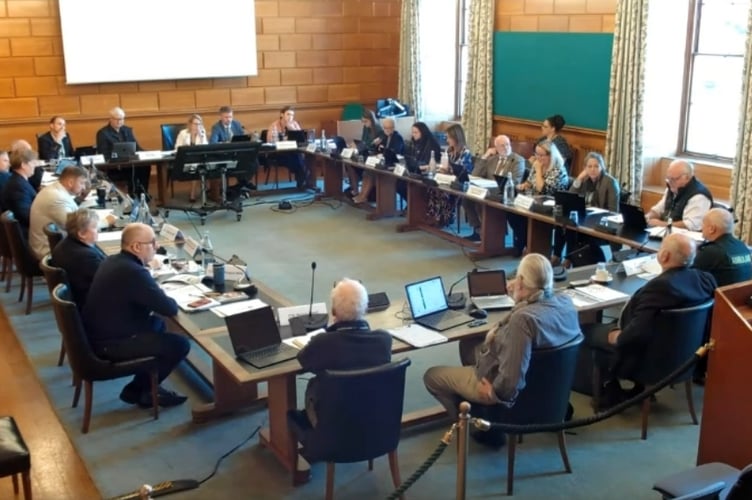
In September, SWAST’s boss, Dr John Martin, told Devon County Council’s health scrutiny committee that the ambulance service had acknowledged concerns from earlier in the year, and removed the target of ending the fire co-responder scheme over 12 months.
Councillor Jess Bailey (Independent, Otter Valley), is understood to be receiving an update soon on the progress of the move to community first responders.
A spokesperson for SWAST said its board is due to meet on Wednesday December 17.
“A holding email was sent to Devon County Council’s [most recent] Health and Adult Care Scrutiny Committee [on 2 December] explaining this position,” the spokesperson said.
“Following our committee meeting, a letter will be sent to Devon County Council’s Health and Adult Care Scrutiny Committee with an update as requested”.
Cllr Bailey and her committee raised concerns in September about the veracity of SWAST data, and asked for a revised quality and equality impact assessment to ensure the potential impact on rural communities of switching away from fire co-responders was fully understood.
Some members of the public, including a former fire co-responder, also outlined concerns.
SWAST said it was “only beginning” to see the benefits of its initial recruitment drive for community first responders, given the proposed switch was first announced in March and it takes around six months to train candidates.
“We have advertisements running for community first responders which close in mid-January with training courses scheduled for February / March 2026,” the spokesperson added.
“These campaigns are focused on the co-responding areas. Where recruitment is not as successful as we hope or we cannot achieve the booked-on hours that we need, we will continue to work with our fire colleagues to refine the co-responding model for the benefit of our patients.
“Fire co-responders across Devon and the wider region are still responding to category 1 calls, when they are requested by ambulance control and are available to attend.
“It is worth noting that every area has a commissioned level of statutory ambulance resource, and community first responders and fire co-responders are additional to this.”
SWAST added that its commitment not to withdraw from any fire co-responding station until it had sufficient alternative provision in place “still stands”.
Comments
This article has no comments yet. Be the first to leave a comment.