
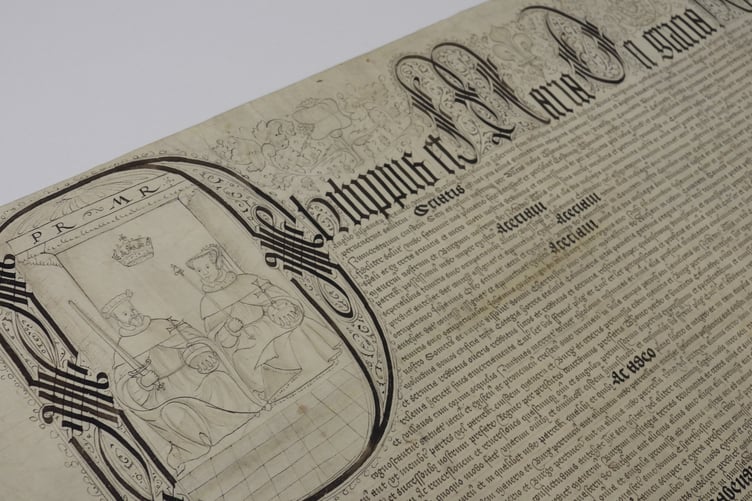
Visitors have just weeks left to see one of Newton Abbot’s most significant historic documents before it comes off display at Newton Abbot Museum. The Tudor document is on display at Newton Abbot Museum until 31 August.
The beautiful royal document has been generously loaned to the Museum by Keith Stokes-Smith, Lord of the Manorial Borough of Newton Abbot, from his private collection. The rare loan offers visitors the chance to see a remarkable piece of local and national history.
Dating from the reign of King Philip and Queen Mary in the 1550s, the royal document records a major turning point in Newton Abbot’s story, the moment when the Manor and Borough passed from Crown ownership into private hands, shaping the development of the town for centuries to come.
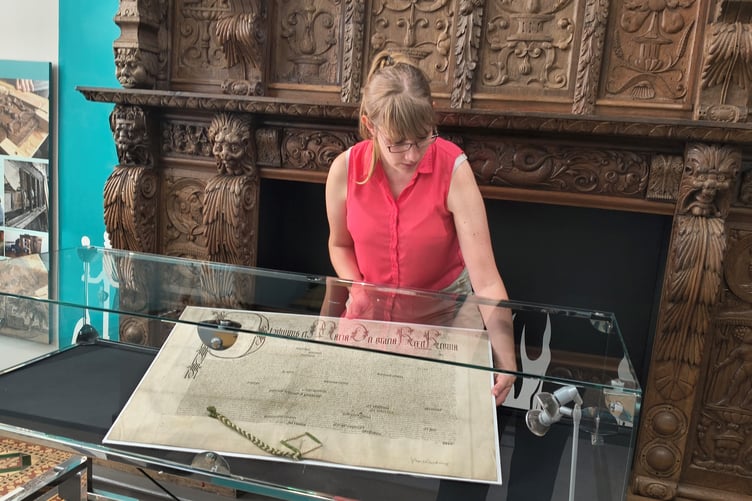
The document, known as Letters Patent, formally transferred the manor, borough and former Abbey lands to Devon landowners Thomas Yarde and Vincent Calmady for £284. Issued under the Great Seal of England, it marked the end of centuries of ownership connected with Torre Abbey and began a new chapter in Newton Abbot’s history.
The document is linked to one of the most dramatic periods of English history. During the reign of Henry VIII, the Dissolution of the Monasteries saw church estates confiscated by the Crown, including lands belonging to nearby Torre Abbey. Newton Abbot was not sold during Henry VIII’s reign, instead it remained Crown property until the reign of Philip and Mary.
The document provides an insight into the reign of Queen Mary I, who is remembered for attempting to restore Catholicism after the Protestant reforms of her father, Henry VIII.
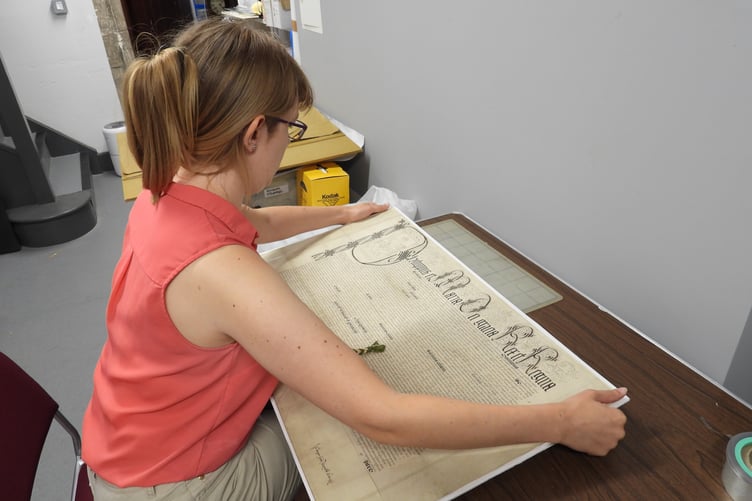
“Documents like this remind us that history is rarely straightforward,” said Joanna Eccles, Curator. “Although Mary sought to restore Catholic worship, she did not undo every consequence of the Dissolution of the Monasteries. This document captures that complexity and shows how national events had a direct impact on Newton Abbot.”



Beyond its historical importance, the document is also a remarkable example of Tudor craftsmanship. Its richly decorated opening with a large, ornamented letter ‘P’ which encloses miniature portraits of King Philip and Queen Mary seated together beneath a crown, emphasising their joint rule following their marriage in 1554.
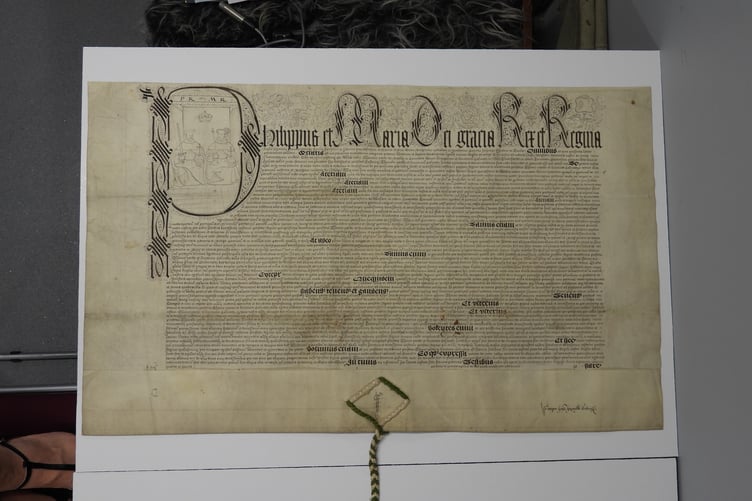
The document’s elaborate border contains symbols, associated with the English monarchy, include the fleur-de-lis, representing the Crown’s claim to France, and the Tudor rose, which symbolised the union of the Houses of Lancaster and York. One motif appears to be a crowned pomegranate, the badge of Catherine of Aragon, Queen Mary’s mother. This would have provided a powerful connection to Mary’s family heritage and royal identity.
“Every detail of this document was carefully chosen,” Joanna added. “It is not simply a legal record of a land transfer; it is a piece of Tudor political messaging, combining royal imagery, artistic skill and local history.”
Admission to the Museum is free. Visitors can also explore The Golden Age of Wildlife Filmmaking, a summer exhibition celebrating the work of renowned BBC wildlife cameraman Andrew Cooper. The Museum’s summer programme of events include Meet the Invertebrates and Meet the Reptiles sessions, Crafty Thursdays, St Leonard’s Tower open days, Young Curator Club and family trails.
Find out more at www.museum-newtonabbot.org.uk, call 01626 201121, or email [email protected].
Comments
We've recently changed our login process. If you have an account for commenting, you will need to re-register on the login window.
This article has no comments yet. Be the first to leave a comment.