

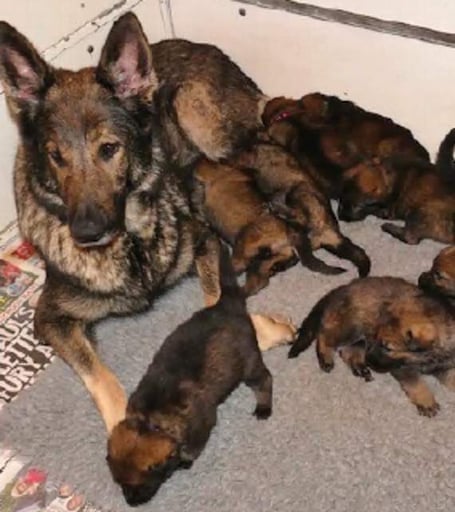
On the Beat with Police Advocate Cllr Mike Joyce.
I AM sure most of us will have seen a police dog at some time or other, either in town or a news report, writes Mike Joyce.
You may also have come across them on Facebook or Twitter where they even have their own accounts these days.
But what do any of us know about the how, why and where of what it takes to train a dog?



I’m grateful to PS Andrew Coleman who found time in a busy schedule to tell all.
He explained that Devon and Cornwall officers are in an alliance with colleagues in Dorset and that between them they have 40 dogs which range in age from puppies to eight years old which is when retirement beckons.
Most of the animals are General Purpose Dogs (GPDs) but there are specialists too which can search for cash, drugs and firearms.
They are also involved with explosive and digital detection, providing support to firearms operations, public order and advice on dangerous and banned-breed dogs.
The team is stationed in four command areas and overseen by an inspector and four sergeants.
The training school consists of nine officers and police instructor staff.
Puppies are trained from an early age and placed with volunteer walkers until a suitable handler is identified and the dog is ready to attend an initial course.
This will usually be around 12 months of age but can be younger in certain circumstances.
All initial GPD courses last 13 weeks, at the end of which the team consisting of handler and dog will be licenced against strict criteria concerning efficiency, safety and control.
The team will then attend local training consisting of at least 80 hours per year plus two bi-annual re-licencing weeks. Teams are expected to reach an advance standard after approximately a year.
Each handler and dog are normally be paired for their entire working careers although injury, illness or operational needs can change that.
On retirement there is no expense spared for the dogs’ welfare, they are looked after exceptionally well.
Handlers have the option to take legal ownership of their animal, with the force’s permission, or a suitable forever retirement home is found with ongoing support offered to the new owners.
Retired dogs are also supported by a charity called Pawsome Pensions which does some incredible work supporting the animals and fund-raising through different methods.
It is run entirely through the Alliance with officers and staff voluntarily giving up their free time for a brilliant cause.
If you’d like to know more visit www.pawsomepensions.org.uk.
On the home page you’ll find the following phrase: ‘We’ve caught the baddies, we’ve had great fun. Help fund our retirement, our duty is done.’
The charity also cares for dogs that have served with the fire service and is worthy of our support.
Until getting in touch with PS Coleman I never quite realised just how much effort goes into rearing, training and supporting these brave animals.
Who says you can’t teach an old dog new tricks?