
TWO women from Widecombe-in-the-Moor who have enriched the lives of generations of inner-city children have been awarded MBEs in the New Year's Honours List. For more than 30 years, Elizabeth Braund and Rosemary Bird – now both in their 80s – have been receiving groups of children from Battersea at East Shallowford Farm. Miss Braund said the award was an acknowledgement for everyone involved in the project. 'People have been very good, really. It isn't just two people here, we have always had help and young farmers have been very good and very interested,' she said. She confessed that the award had not come as a complete surprise. She said: 'I had heard something from one or two people, but it never entered my head we would get something. I really hadn't thought about it at all.' The secondary school-aged youngsters, many from deprived backgrounds, come in groups of eight to 10 and spend a week or two at the farm, mucking in with the rituals of looking after the animals, cooking, taking regular mealtimes eaten round a table and having a chance to see a bit of what south Devon has to offer. The farm also welcomes children with special needs and those excluded from school for longer periods. Miss Braund said that troubled youngsters often blossom once they are in the stable atmosphere of the farm. 'A lot of these kids come from families that are so broken up and they don't have too much security and school teachers are so busy they can't cope with these things. They don't have a normal family life. Partly the big thing about this place is that it always goes on,' she said. The children are supported by Providence House, a youth project run by Wandsworth Council, originally set up by Miss Braund after the second world war when she lived in London. At the time she was working for the BBC and, with a group of friends, started a church magazine from a run-down chapel at Clapham Junction. The local children wanted to know what they were doing and what started as a magazine turned into a youth centre, bursting with children of all ages. Miss Braund said she had no intention of doing anything with children and had no degree in youth work, but she could see that as all the old back-to-back houses were demolished, whole communities and the old ways of family life were also being destroyed. In the new tower blocks that replaced them, children were shut up in flats with no space for animals or plants and often cut off from their neighbours. She conceived the idea of a farm with a few animals that the children could visit and in 1974 she and Miss Bird bought East Shallowford Farm. On its 45 acres they keep a herd of south Devon cattle, black face ewes, pigs, hens, ducks, geese and ponies. 'The children obviously get quite a lot out of it. I was very surprised some of them say the whole world gets bigger,' she said. There are also two big work horses, which the older children are taught to use for harrowing and turning hay. She added: 'The horses teach them a lot. To walk behind one of these big horses is quite something. The children get quite a buzz.'
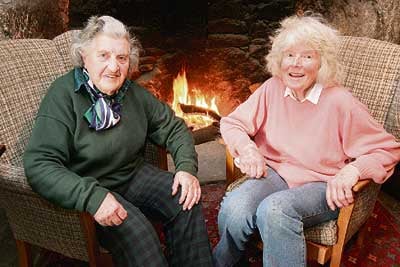
Accolade: Elizabeth Braund and Rosemary Bird are awarded MBEs in the New Year honours.

More About: