
Skills normally used to keep historic steam locomotives and carriages running have helped turn back the clock at one of the West Country’s busiest mainline stations.
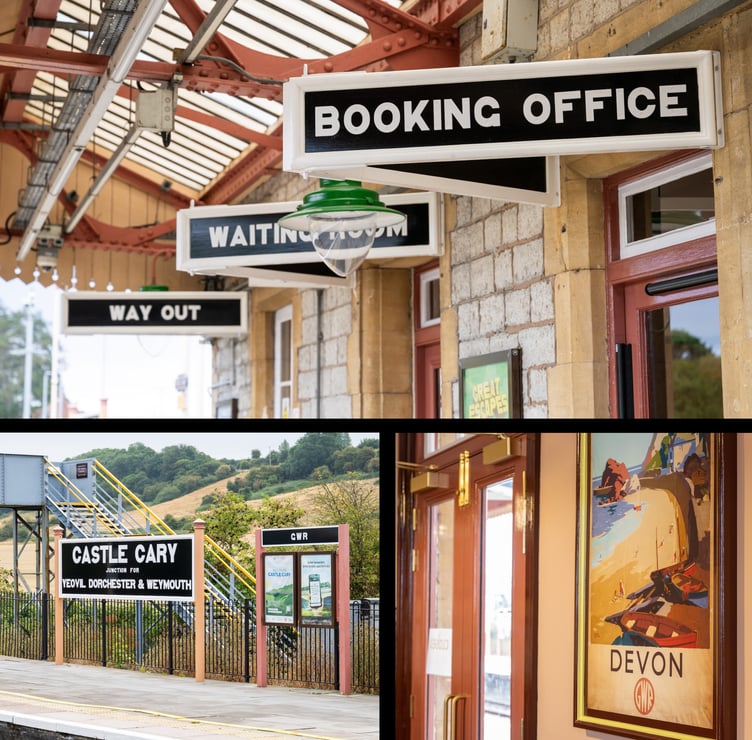
The South Devon Railway at Buckfastleigh has completed its first heritage signage project, producing a collection of traditional Great Western Railway inspired signs as part of the £835,000 restoration of Castle Cary station in Somerset.
The unusual commission grew out of SDR’s long standing relationship with Great Western Railway.Following a visit to SDR’s workshops, discussions began about how skills used to restore and maintain historic railway equipment could play a part in GWR’s plans for Castle Cary.
Working from original examples, the SDR team developed designs reflecting the station’s 1920s Great Western heritage, combining traditional appearance with modern manufacturing techniques.Every sign was referenced against surviving original examples to ensure details were reproduced as authentically as possible.
Appropriately, much of the work took place in SDR’s heritage engineering workshops alongside steam locomotives and carriages dating from the same era the signs were designed to recreate.The project brought together the railway’s full-time skilled heritage engineers and volunteers.
“Our workshops are normally associated with restoring and maintaining locomotives and carriages, so this was something rather different for us,” said John Moorhouse, SDR’s engineering manager.
“What made it particularly satisfying was that we were creating 1920s style railway signs in workshops where our team is surrounded by railway equipment from exactly that period.
“We were able to study original examples, understand how they should look and then use the skills within the team to produce authentic reproductions using modern techniques.“It is the first time we have undertaken a project of this kind and, in doing so, we have developed another specialist heritage skill which we can now offer to other railways, organisations and individuals.”
Castle Cary’s restoration was officially unveiled in August following an £835,000 investment funded by the Department for Transport and Railway Heritage Trust.
The wider project has restored much of the station’s early 20th century character while introducing modern passenger facilities and improved accessibility.“It’s fantastic to see Castle Cary returned to its former glory.



“We’ve carefully restored many of the building’s historic features while delivering modern facilities for customers, creating a station that we’re immensely proud of and one that honours Great Western Railway’s rich railway heritage,” said GWR’s business assurance and property director, Joe Graham.
“Our stations tell the story of the railway and the communities they serve. Preserving and celebrating that heritage is incredibly important, and this project shows how historic railway buildings can be sensitively restored while continuing to meet the needs of today’s passengers.
“We’ve had lots of positive comments, in particular, about the heritage signage at Castle Cary and we thank South Devon Railway for their brilliant contribution.”
For SDR, however, its contribution could mark the beginning of a new chapter for skills developed primarily to preserve the past.
The railway is now able to undertake commissions for bespoke heritage railway signage, adding another capability to the specialist engineering work carried out at its workshops.
Comments
This article has no comments yet. Be the first to leave a comment.