

If there is one thing we all know about the climate crisis, and more importantly how to mitigate it, it is that trees are so important, writes Jessie Stevens.
Being one of nature’s biggest and most effective carbon sinks (a system or object that stores CO2 from the atmosphere) and supporting huge ecosystems, trees really are the way forward.
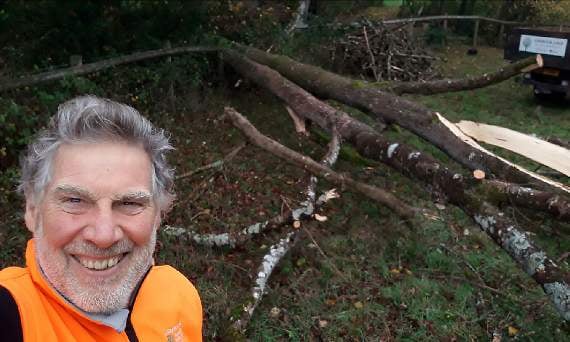
To start off the new column, I met with Paul Richards, a woodland manager looking after trees in Teignbridge.
He is passionate about sustainability both in the management of woodlands, and also in the trade of logs as fuel.
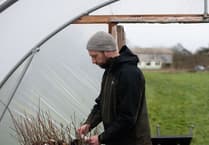
He runs his company, Ambrook Logs and Woodland Management, upon his ethos of maximising the health of woodlands, flora and fauna by working with them, not against them.
What inspired you to start your business?
PR: My passion for being in woodlands and in nature was the driving force behind the start of my business.
Ambrook Logs grew from the enjoyment I had of managing the natural world and specifically trees and hedges in a way which improved them and biodiversity in order to help them flourish.
I call this ‘stewardship’. My business is built upon the process of improving woodlands by making space and increasing light and then using the by products (branches and damaged trees) as a source of renewable fuel.
What impact has this had on the local community?
PR: From my own experience, people are really enthusiastic about my passion for the environment, as one of my aims for the business was being an ethical log-seller.
Now, a lot more people are paying attention to the carbon footprint of their logs (how far they have travelled and how they are dried) as this is a very unregulated business.
Many people are unsure about the new ’Woodsure scheme’ coming into force from May, surrounding log quality and moisture content.
I hope that through my passion and knowledge, I am able to provide them with a simple and reassuring service and advice to make this transition easier.
What is your top piece of advice to those trying to be more environmentally conscious?
PR: The first thing I would always say is that you have to look after yourself. Your own wellbeing and health is the primary thing you should consider.
At the moment, with a lot of people feeling really stressed, it is about taking time out, especially in nature or woodlands which have proven health benefits to boost wellbeing.
I feel it is so important to just be outside either walking, or just sitting and marvelling at the sheer scale of nature. Only after that, can you start making small lifestyle changes, bit by bit, to help the environment.
What are your hopes for the future?
PR: My hopes for the future are that we don’t go back to the old ‘normal’.
What I hope we will all do is be more connected to nature and therefore more concerned about the environment.
This connection will help us make the changes that are needed to protect it.
I hope that this terrible situation we are in, will help people to understand how we can work with the environment and not go around acting like we have another one to ‘burn up’!
Comments
This article has no comments yet. Be the first to leave a comment.