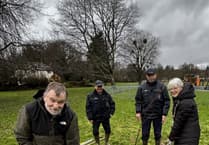
JUST to show that we at the Mid-Devon Advertiser series are not going to let ourselves be intimidated by all this talk of carbon footprints, offsetting and renewables, we submitted ourselves to an environmental audit. Envision advises west country businesses how to clean up their acts and claims to have saved them more than £2m in the process. To give an idea of the cultural clash, Envision runs courses which promise to enable the learner to 'understand the meaning of continual improvement'. We at the Advertiser, however, pin our faith in a poster, tacked to the newsroom wall: 'Keep Calm and Carry On'. We operate from a rabbit warren of a building; a medieval Manor House built in 1534 which has more staircases than you can shake a stick at – and its own ghost. Sandra Perraton, the general manager was, perhaps understandably, a little apprehensive. We are essentially an office operation and Mrs Perraton has tried using recycled paper in office printers, experiencing first hand the problems caused by it, and has tried using only eco products for cleaning to find that they do not do what it says on the tin, although these products are improving all the time. Have we any insulation? No. The building is rented from the Lord of the Manor. Double glazing? No. Mrs Perraton points to a sash window. Difficult in a Grade II listed building. Wendy Stephenson, our inquisitor, used to work for Shell and quizzed oil platform managers on their environmental impact before they knew the meaning of the words. In the old days she used to get thrown off sites. Things are much nicer now, she says. people are queuing up to speak to her. We go through our heating system, water use and waste. Ms Stephenson documents everything so that she can analyse our usage. A report is due to follow. All our newspapers and paper are recycled as are our ink cartridges. More and more people are signing up to green electricity, Wendy tells us. Whatever you believe about climate change and its causes, fossil fuels are running out and in 10 to 20 years' time the UK will be at its most vulnerable. There is not enough renewable capacity to go round and the big prize is to get energy use down. Low-energy light bulbs save £7 a year in a domestic setting – more in an office, says Wendy, looking at our high-energy ones. If persuasion will not work, compulsion no doubt will. In 2010, organisations with energy bills of more than £250,000 will have to pay for their CO2. The cost of carbon dioxide is still being decided but will probably settle at about £8 a tonne. Smaller companies can start paying for the carbon on a voluntary basis if they want. There are handy websites for calculating your carbon footprint: mycarbondebt.com and co2balance.com. The average CO2 emissions in the UK is 10 tonnes a head – half America's wasteful 20 tonnes but compare that with 0.6 tonnes for an average African. The whole exercise – no doubt necessary and important – has a slight Chinese Cultural revolution mind re-programming feel to it. But at the mention of Scouts collecting our waste cardboard instead of letting it go to landfill where it will give off methane (worse than CO2), a new picture forms of wartime children drafted in to scour the hedgerows for rosehips. As the poster says: Keep Calm and Carry On.