
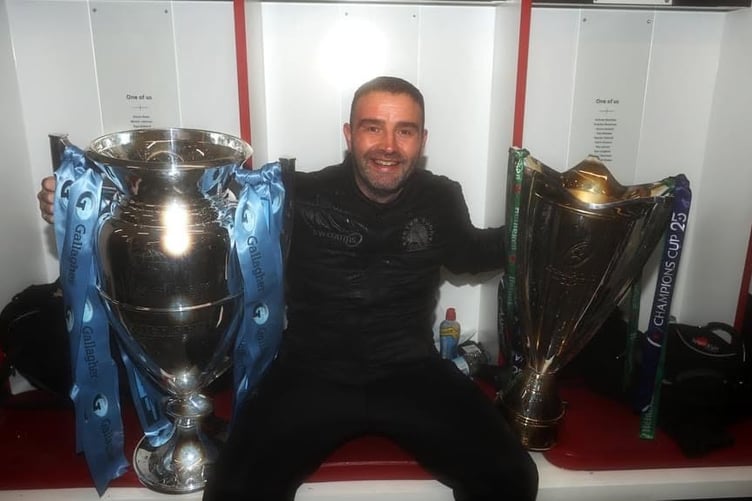
A LITTLE over 14 months ago, Exeter Chiefs hit rock bottom.
A humiliating 79-17 mauling at Gloucester exposed every weakness, every doubt and every uncomfortable truth surrounding a club that, for so long, had been the benchmark of English rugby. It wasn’t just the scoreline that stung, but the sense that something deeper had shifted.
The sight of club CEO and chairman Tony Rowe storming into the changing room afterwards and demanding answers sent shockwaves far beyond Kingsholm, and for many watching on it felt like a line in the sand had been crossed that day.
Some genuinely wondered if the glory days were over, whether the cycle had finally run its course and whether the Chiefs had reached the natural ceiling of their story. However, that interpretation always felt too neat, too simplistic, too willing to ignore what this club has been built on from the very beginning. Because if there is one thing Exeter Chiefs have repeatedly shown, it is an ability to absorb punishment, reset, and come back stronger when it matters most. They were written off before, and they have made a habit of proving that mistake expensive.




Fast forward to Saturday and the Chiefs are back at Twickenham for their first Premiership Rugby final since 2021. Nobody gave them a prayer at the start of this run. Not after the turnover of senior players, not after the financial tightening, not after a period where performances dipped and confidence looked fragile at times. And certainly not after Gloucester. Yet here they are, one game away from completing one of the most remarkable turnarounds this club has produced in the professional era.
Having covered the club since 1999, I’ve been fortunate enough to witness every chapter of a story that has never really followed the script. From the days of trying to establish themselves as anything more than hopeful outsiders, to becoming champions of England and Europe, this club has repeatedly confounded expectation.
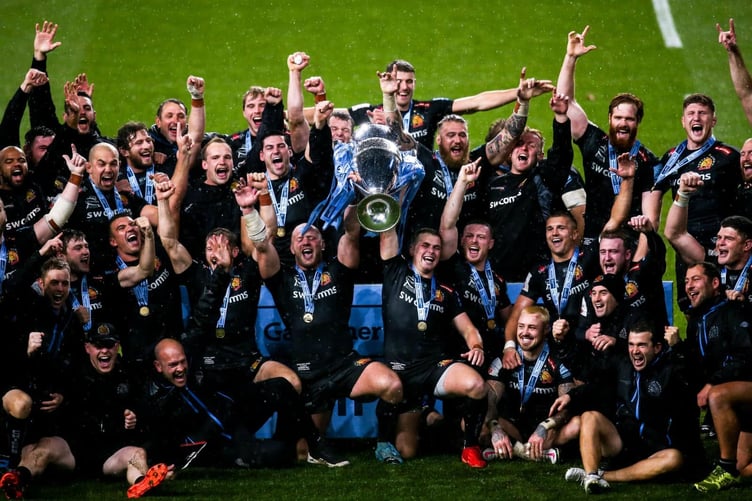
If this current group were to go all the way and lift the Premiership trophy at Twickenham, it would sit right up there with anything that has come before it, not necessarily because of what it adds to the trophy cabinet, but because of what it would say about where they have come from in such a short space of time.
When I first started covering the Chiefs, I’ll be honest and say I didn’t fully understand what I was looking at. It was another assignment, another club, another season. But what became clear quite quickly was that the club operated differently. There was a stubbornness to the place, a refusal to accept the usual boundaries that smaller clubs were expected to live within, and a belief that progress didn’t have to be incremental forever. Even before the major trophies arrived, there was a sense that something was being built that could eventually challenge the established order.
That feeling only deepened when I arrived to work at the club in 2010, at a time when very few people outside Devon gave the Chiefs a hope of surviving in the Premiership.
I can still remember going to the season launch with Rob Baxter and then club captain Tom Hayes, listening to the questions being asked and the assumptions being made. Much of the external narrative centred on how Exeter would enjoy their “one and only season” in the top flight, who they would like to play before heading back down, and how long it would take before reality caught up with them. The expectation wasn’t just that they might struggle, but that they did not belong.
Inside the club, however, the tone could not have been more different. Messrs Rowe and Baxter had something far more ambitious in mind. There was a plan, not a vague aspiration, but a structured belief that the Chiefs could become a force in the game. The players themselves carried that same edge, that same sense of being underestimated, and it created a collective chip on the shoulder that fuelled everything they did. This was never going to be a one-season experience at the top level. It was going to be something far more permanent than that.
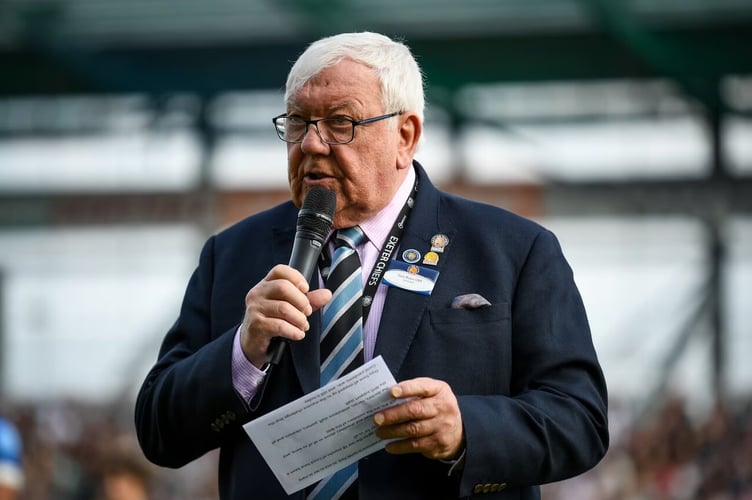
Rowe spoke openly about a vision that, at the time, sounded almost provocative in its confidence. Not just survival in the Premiership, but a club that would one day be crowned the best in England and, eventually, Europe as well. Outside the walls of Sandy Park, those comments were often met with scepticism or outright dismissal. There was a sense from some that it was bravado rather than blueprint. But inside the club, it felt entirely different. There was clarity, detail and conviction behind every step, and slowly but surely, it all began to take shape.
What followed over the years was one of the most impressive rises the English game has seen. Premiership titles, European success, packed-out stadiums and a reputation built on physicality, cohesion and relentless work ethic. But more than anything, it became a club that knew exactly what it was. That identity never really wavered, even when personnel changed and cycles evolved. It was anchored in standards, and those standards became non-negotiable.
For 13 years I was privileged to work inside that environment, overseeing media and communications during the most successful period in the club’s history. From the outside, supporters see the matches, the results and the moments that define seasons. Inside, you see the machinery that makes it all possible.
You see the early starts, the late finishes, the analysis, the recovery work, the recruitment and the constant pressure to improve. Success at this level is never accidental, and it certainly never happens in isolation on a Saturday afternoon.
That perspective also shapes how you view the difficult periods. Because you know the standards don’t disappear, even when results dip. You know Baxter doesn’t suddenly become a different coach, and you know experienced players don’t suddenly forget how to perform. What you are seeing instead is transition, the most uncomfortable phase in any successful cycle. And that is exactly what the Chiefs went through as senior figures moved on, experience thinned out, and the squad had to evolve into something new.
Last season, though, was the lowest point. There were moments of real uncertainty, and performances that simply didn’t meet the levels this club sets for itself. The defeat at Gloucester, conceding 79 points, felt like a brutal crystallisation of those issues. It was a moment that forced reflection and hard conversation, and whatever people think of what followed in that changing room, there is no denying it became a turning point.
From that point onwards, the response has been significant. Baxter deserves enormous credit for steadying things during a turbulent spell, but so do the players. This group has had to grow up quickly. Some have taken on leadership roles earlier than expected, others have rediscovered confidence in their own game, and many have simply adapted to the demands of a higher level with real determination. Add in some smart recruitment and suddenly the picture looks very different.
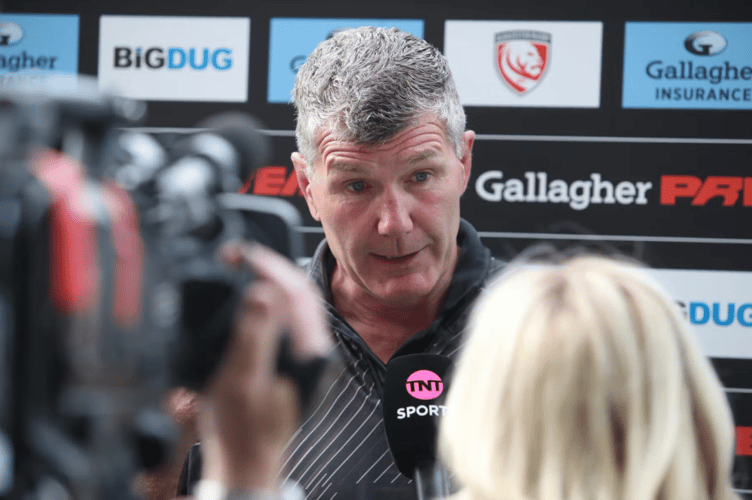
What stands out most now is how young this group is. There is experience in key positions, but the spine of the squad is still developing, still learning, still growing together. That is what makes this feel less like an ending and more like the start of something again. The Chiefs have been here before in different forms, building cycles that eventually peaked at the very top. There is no guarantee that happens again, but there is certainly enough evidence to suggest this is not a short-term resurgence.
The potential arrival of investment from Black Knight Sports and Entertainment only adds another layer to that future. Not as a rescue package, but as an opportunity to accelerate what is already being rebuilt. The Chiefs are not starting from scratch here. They are not broken. They are in motion again, and that is a very different position to be in when external support arrives.
As for Saturday, I’ll once again be pitchside at Twickenham, looking at it from a different perspective than the one I once had inside the club, but feeling the same emotions all the same. I’ve been fortunate enough to experience victory there with the Chiefs twice before, and I know exactly what those moments mean to everyone involved. I also know how quickly finals can turn, how little they care for narrative or sentiment, and how ruthlessly they strip everything back to execution under pressure.
Whatever happens, this Exeter Chiefs group has already done something important. They have reminded people who they are. Not a club in decline, but a club capable of rebuilding and returning to the biggest stage in the domestic game. Fourteen months ago they were being written off. Now they are one win away from becoming champions again.
And if history has taught me anything about Exeter Rugby Club, it is that writing them off has never been a particularly safe bet.
Comments
This article has no comments yet. Be the first to leave a comment.