
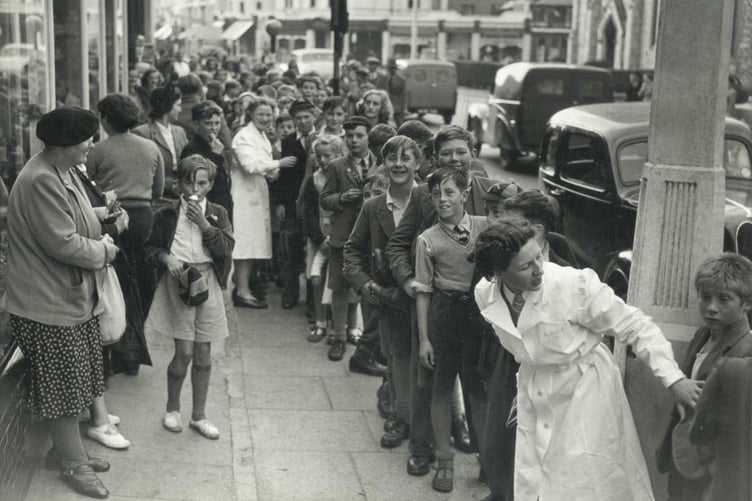
Treasure – the valued objects we hold dear – is rarely found through dog-eared maps. More often, it is found entirely by chance. The Bibbings photographic archive was uncovered in just such a way, when a member of the public spotted it at the bottom of a rubbish skip . Thanks to its miraculous rescue and a generous donation, this extraordinary collection of social history photography has been saved from destruction and has been preserved at Newton Abbot Museum.
The collection was the work of Arthur Vincent Bibbings, whose name has been synonymous with Queen Street for generations. Their story is a fascinating journey of science, scent, and snaps—a true tale of the chemistry of photography.
Alchemy on Queen Street
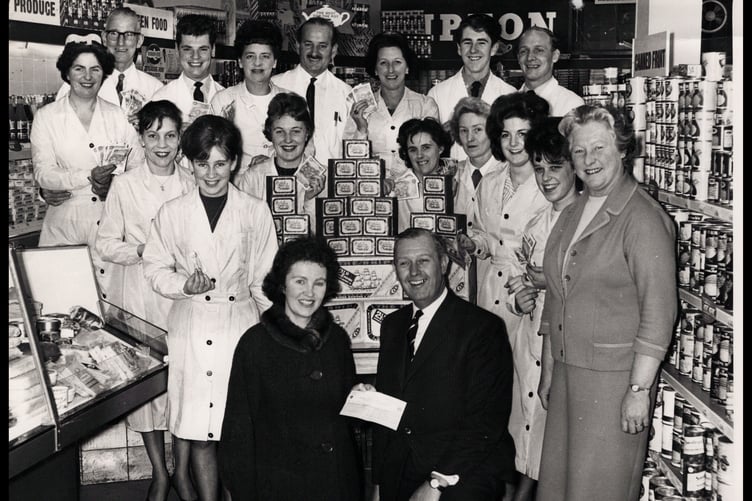
Curatorial Assistant Katie Petley-Jones says “Our research shows that the family's Newton Abbot fame began with George Bibbings, a talented blacksmith who secured the lucrative contract for shoeing horses for the London-to-Plymouth mail coaches. Thanks to the success of his business, his son, John Henry Bibbings, benefited from a higher education and established the family’s iconic presence on Queen Street.”
After qualifying as a pharmaceutical chemist, John Henry opened his pharmacy in 1877. It was a masterpiece of Victorian design, featuring two tall bow windows of plate glass, a magnificent mosaic floor laid by Italian craftsmen, and cabinets crafted from rich Honduras mahogany containing a "drugs run" of 117 small drawers.
John Henry was both a chemist and a botanist. With a pouch of gold sovereigns, he travelled to Grasse in southern France to buy essential oils which he turned into fragrances like "Devonia Violets" and "Bradley Woods Bouquet" back in Newton Abbot. His advertisements, from 1904, boasted that his scents could withstand repeated washing and still give off "whole volumes of enchanting odours!"
You can make up your own mind when you next visit the museum as you can experience the Bradley Woods Bouquet scent for yourself.
From Potions to Pictures



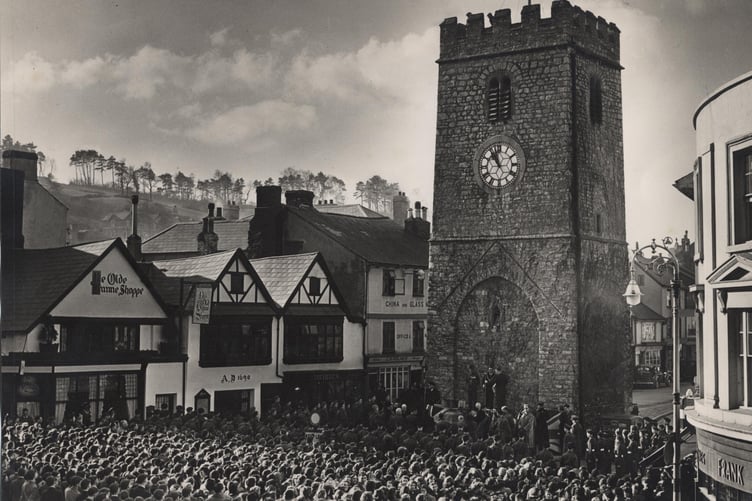
In 1942, the pharmacy passed to his son Arthur and his wife Kathleen Bibbings. Arthur’s true passion was the magic of photography. He converted the pharmacy’s old backroom laboratories into photographic darkrooms, complete with lead-lined tanks.
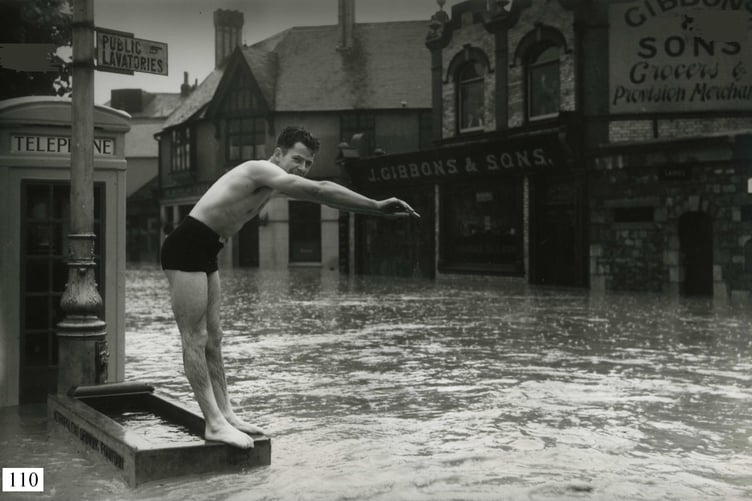
While Arthur employed a pharmacist to run the dispensary, he spent his time behind the lens. He became one of the town’s most prominent photographers, capturing everything from breathtaking Dartmoor landscapes to portraits and local news events.
Saved from the Skip
Joanna Eccles, Curator, Newton Abbot Museum says “Arthur’s camera captured the very soul of Devon. It is extraordinary that we came so close to losing such an invaluable archive of photographs – they are irreplaceable and we are so grateful to have them in our collection, allowing us to save them for future generations.”
Admission to the Museum is free, with changing displays for our Object of the Month, Photo Wall, New Acquisitions Case and Your Space Community Case. You can also follow us on our social media where we regularly share objects from the collection on #MuseumObjectMonday and #PhotoFriday.
Comments
This article has no comments yet. Be the first to leave a comment.